

Anyone who has stepped on a stray board book in the middle of the night knows the struggle is real. Kids’ books multiply fast, and in a small bedroom, playroom, or reading nook, that growing pile can turn into chaos before you even notice it happening.
The good news is you don’t need a big house or a built-in library to keep things tidy. With a little creativity, even the tiniest corner can become an organized, kid-friendly reading spot.
The trick is choosing storage that works with your space instead of fighting it, while still making books easy for little hands to reach and put away. Below are 11 practical, budget-friendly ideas that actually hold up to daily use by children.
1. Wall-Mounted Picture Ledges
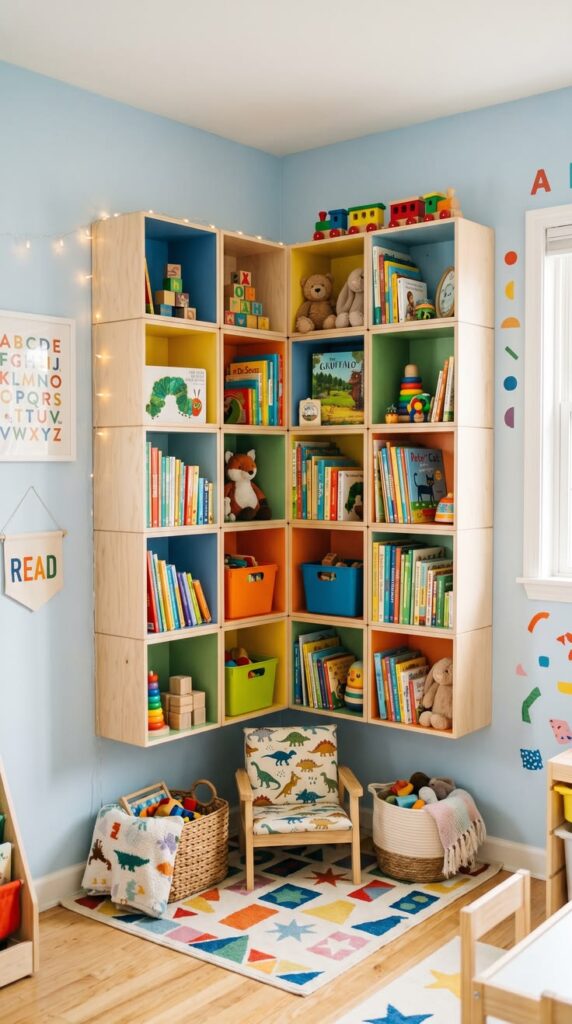
Floating picture ledges are one of the easiest ways to display books without eating up floor space. Because they’re shallow, they can be mounted almost anywhere — above a bed, along a hallway, or beside a reading chair.
The real benefit is that books face outward, cover visible, which makes it much easier for young kids to pick a book by picture rather than by spelling out titles. This alone can make story time far more independent.
For safety, choose ledges rated for children’s rooms and anchor them securely into wall studs. Keep them low enough that toddlers can reach without climbing, and rotate the books every couple of weeks to keep things fresh.
This idea works beautifully in a small bedroom where a full bookshelf simply won’t fit. If you’re planning a broader room refresh, it pairs nicely with other space-conscious layout choices, like the ones covered in this guide to teen girl bedroom ideas, which also focuses on maximizing a compact footprint.
2. Over-the-Door Hanging Organizers
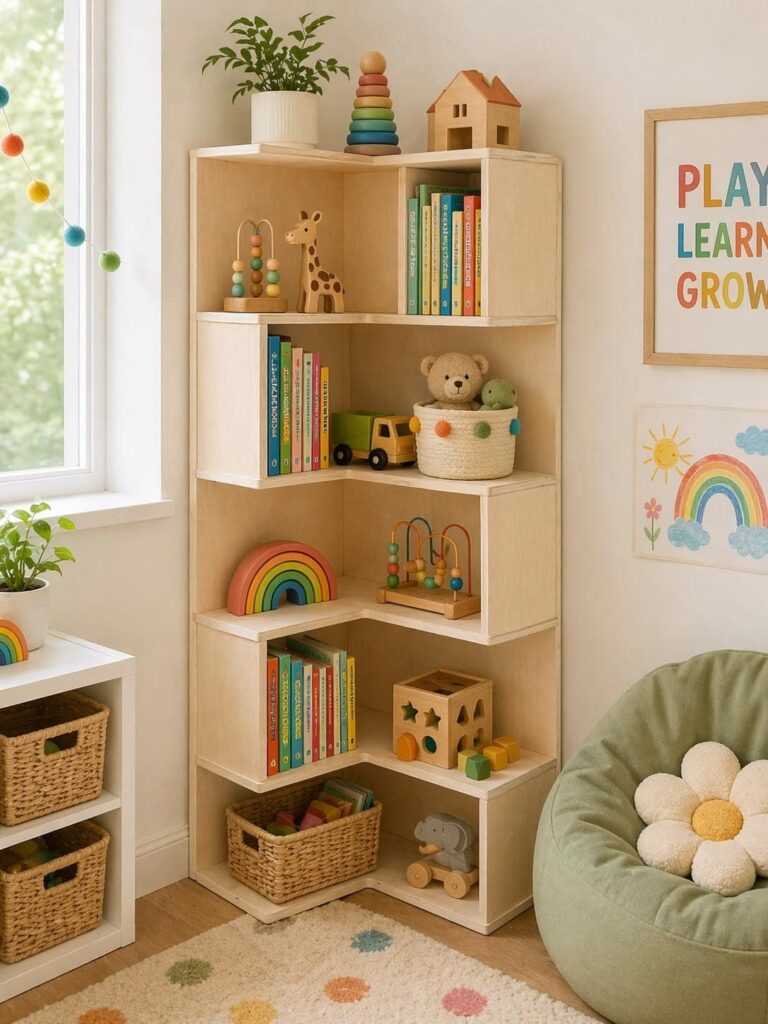
Fabric or clear-pocket organizers made for shoes work surprisingly well for books, especially in shared bedrooms where floor and wall space are both limited. Hang one on the back of a closet or bedroom door and you instantly gain a dozen or more storage slots.
These organizers are ideal for board books, magazines, or smaller paperbacks that would otherwise get lost in a bin. Since everything is visible in individual pockets, kids can spot their favorite title in seconds.
A few practical tips: choose an organizer with clear vinyl pockets rather than solid fabric, so covers stay visible. Also check that the hooks are sturdy enough not to slip off a hollow door over time.
This is a great budget option too, often costing less than twenty dollars, and it requires no drilling or permanent installation — a bonus for renters.
3. Rolling Book Carts
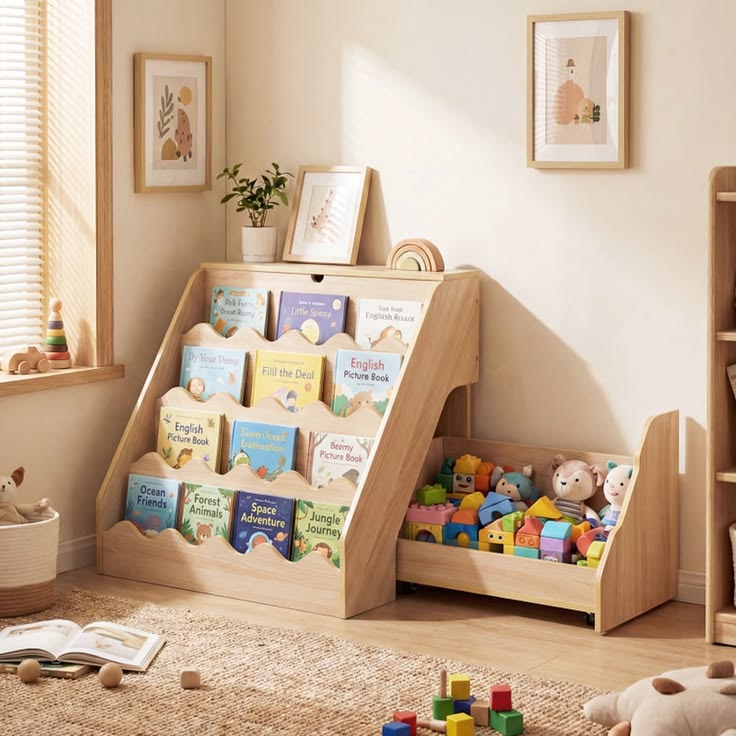
A small rolling cart, originally designed for kitchens or offices, doubles as fantastic mobile book storage for kids. Because it moves on wheels, you can shift it between a play area, bedroom, or reading corner depending on the time of day.
Multi-tier carts with open shelves let books stand upright and stay visible, similar to library displays. Kids tend to enjoy the novelty of “wheeling” their books around the room, which naturally encourages them to help tidy up.
Look for a cart with a slightly raised lip or rail on each shelf so books don’t slide off during moves. Metal wire carts are sturdy and affordable, while wooden versions blend more seamlessly into a nursery’s décor.
This solution is especially useful in multi-purpose rooms, where the same square footage needs to serve as playroom, homework spot, and bedroom all at once.
4. Low, Open-Front Bookshelves
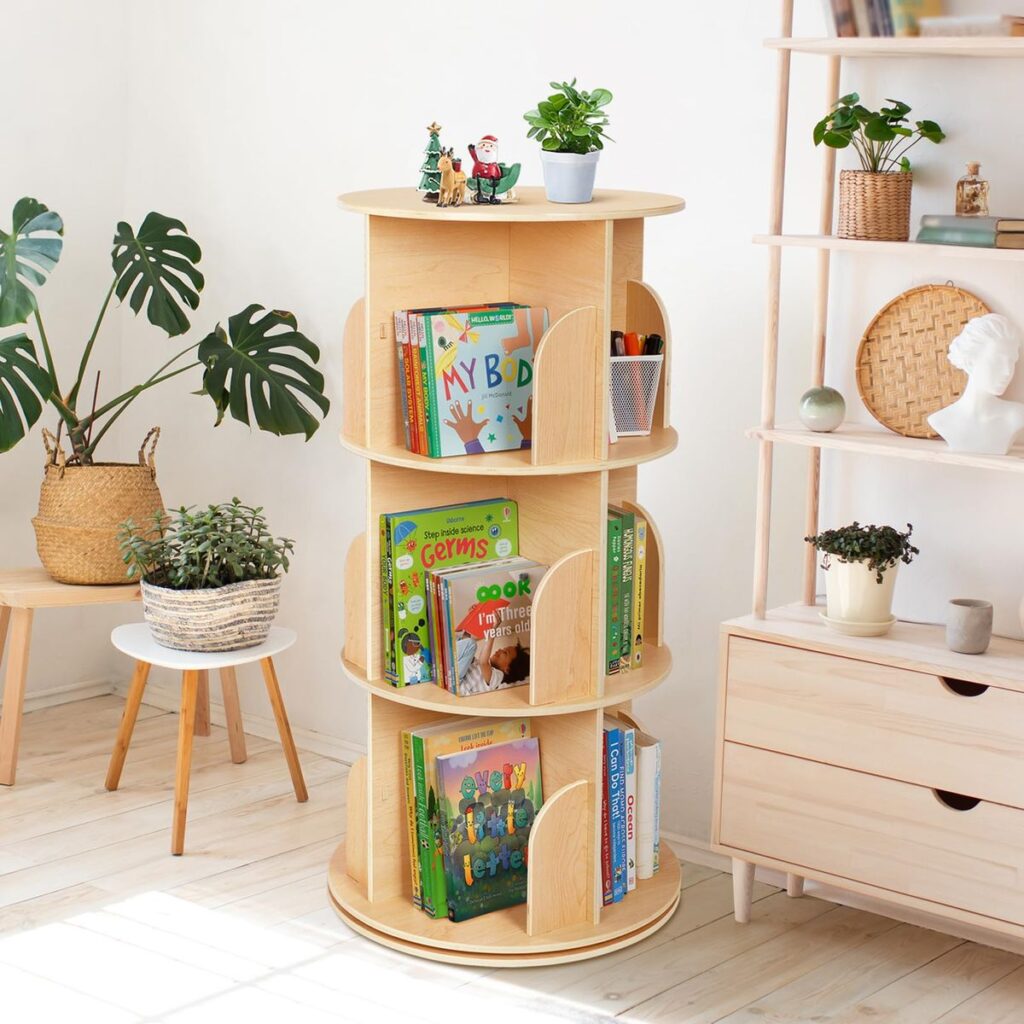
A dedicated kids’ bookshelf with a forward-facing design is one of the most tried-and-true book storage solutions, and for good reason. Instead of a spine-out layout, books sit in slim slots with covers on display, which is far more inviting to a child who isn’t yet reading fluently.
Because these units are typically shorter and shallower than adult bookshelves, they fit neatly into small bedroom corners, under windows, or beside a reading chair without overwhelming the room.
Choose a unit no taller than your child can safely reach, and secure it to the wall with an anti-tip strap, especially in homes with toddlers who like to climb.
Pairing this kind of open shelving with soft seating and good lighting turns a small corner into a genuine reading nook your child will actually want to use.
5. Under-Bed Storage Bins with Labels
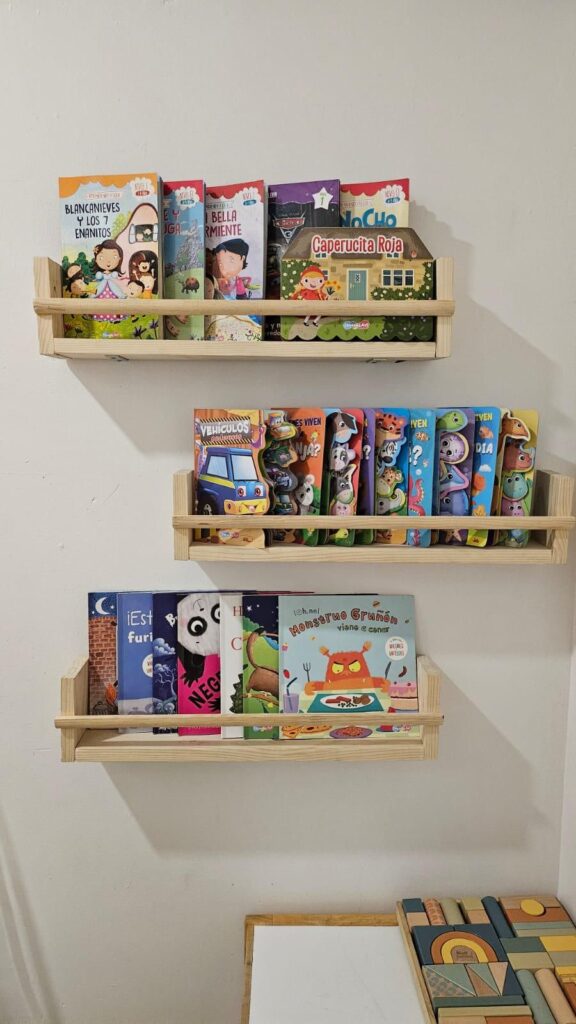
Under-bed space is one of the most overlooked storage zones in a child’s bedroom. Clear or fabric bins on wheels slide easily in and out, giving you a home for books that aren’t in rotation without taking up a single inch of visible floor space.
Label each bin by category — bedtime stories, chapter books, favorites — so children can find what they want without dumping everything out. Picture labels work well for kids who aren’t reading yet.
Choose bins with low sides so smaller children can lift the lid and retrieve books independently. This setup is perfect for smaller bedrooms where every visible surface needs to stay clear.
Rotating books between under-bed storage and open shelving also keeps the room feeling fresh, since kids rediscover “new” books every few weeks.
6. Hanging Canvas Book Slings
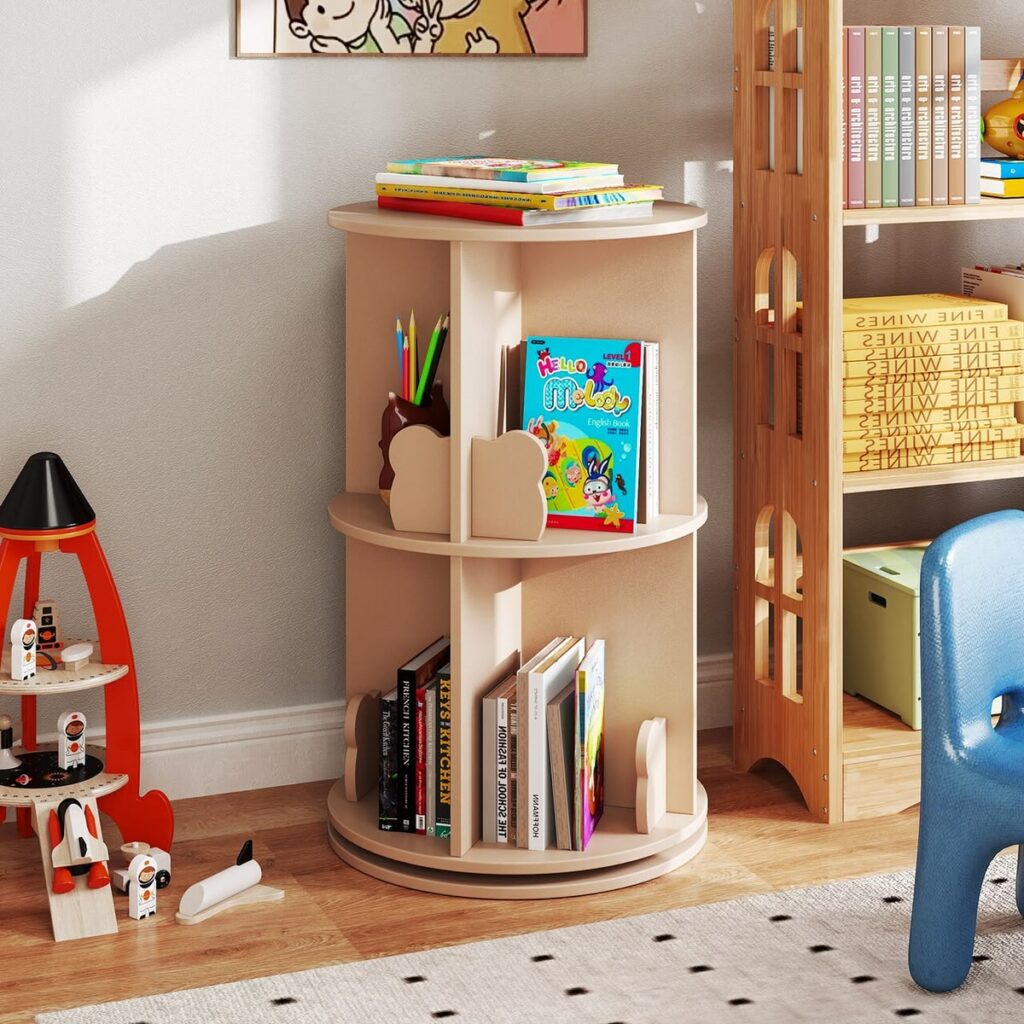
A canvas or fabric book sling, sometimes called a hammock, is a charming and space-saving solution for corners that would otherwise go unused. Mounted between two walls or in a closet nook, it creates a soft pouch where books can pile in without looking messy.
This idea works particularly well in nurseries and toddler rooms, since the sling adds a decorative element while solving a real storage problem. Many parents like that it keeps books off the floor and away from crawling babies who might chew on cardboard covers.
Install anchors into wall studs for safety, and avoid overfilling the sling, since too much weight can strain the fabric and mounting hardware over time.
Because it uses vertical corner space rather than floor space, this is one of the more genuinely space-saving ideas on this list, especially for small nurseries or shared rooms.
7. Repurposed Wooden Crates
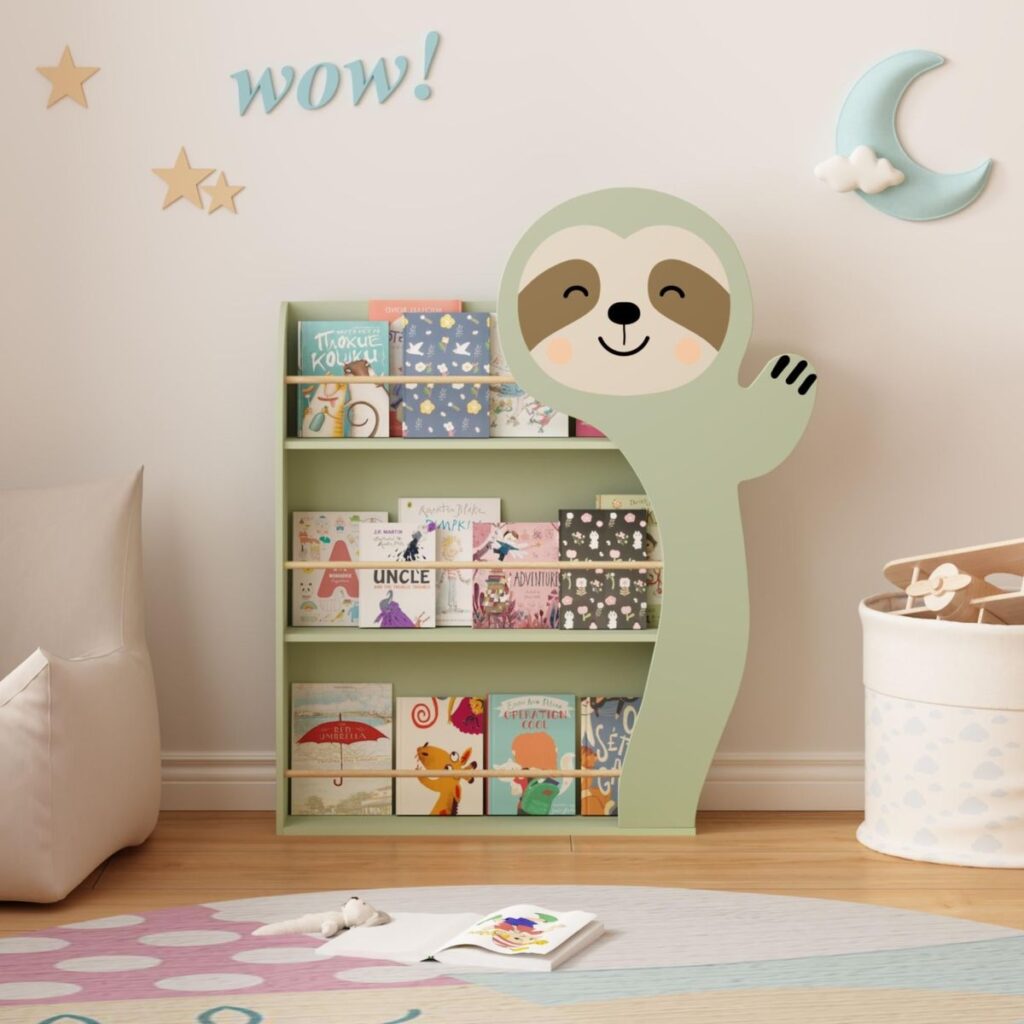
Wooden crates, whether upcycled from storage or bought new, make sturdy and stylish book bins for kids’ rooms. Stack two or three crates in a small pyramid shape, or mount them directly to the wall as floating cubbies.
Crates give off a cozy, rustic look that fits nurseries, playrooms, and reading corners alike, and they’re inexpensive compared to built-in furniture. Add a coat of child-safe paint in a fun color to match the room’s theme.
Sand any rough edges thoroughly before use, and if crates are mounted on a wall, secure them with brackets rather than nails alone, since kids often pull on shelves to test their sturdiness.
This is a favorite for playroom corners where books need to sit alongside toys, since crates are versatile enough to double as toy bins when book storage needs shift over time.
8. Window Seat with Hidden Storage
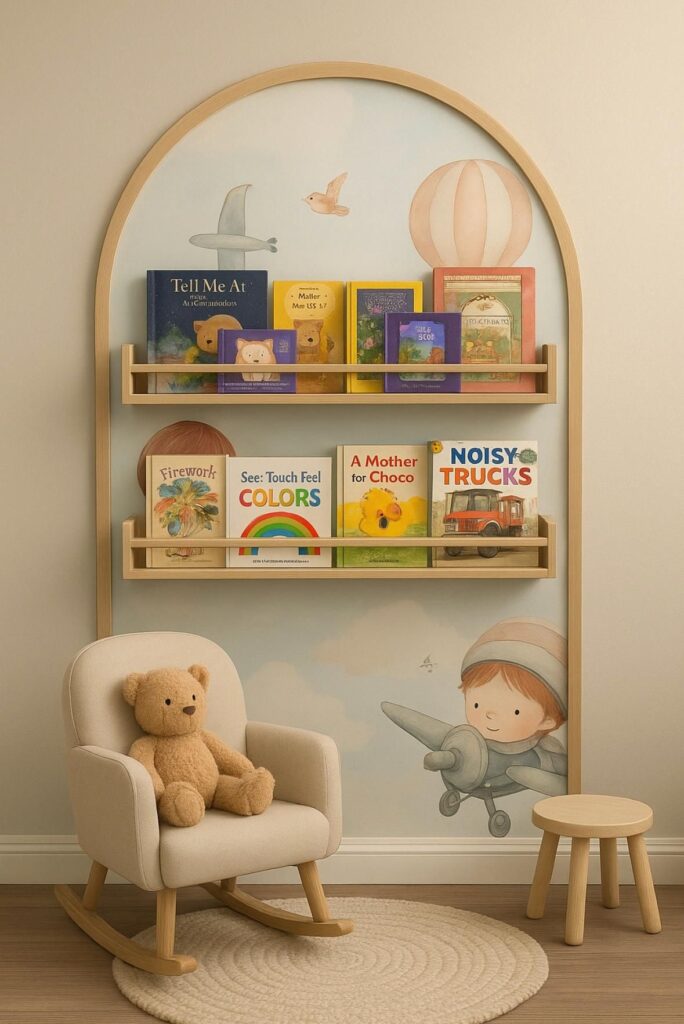
If your child’s room has a window nook, building or buying a window seat with a lift-top or drawer underneath turns dead space into both a reading spot and book storage all in one. This is one of the more transformative small-space ideas because it multiplies function without adding footprint.
Kids get a cozy reading perch bathed in natural light, and parents get a place to stash extra books, blankets, or stuffed animals out of sight. It’s a favorite in small bedrooms where floor space for a separate bookshelf simply doesn’t exist.
Add a soft cushion and a few pillows to make the seat inviting, and use the underneath storage for books that rotate seasonally or by reading level.
This idea also works in a shared playroom or reading corner, turning an awkward gap between furniture into a genuine focal point rather than wasted space.
9. Stair-Step Wall Shelves
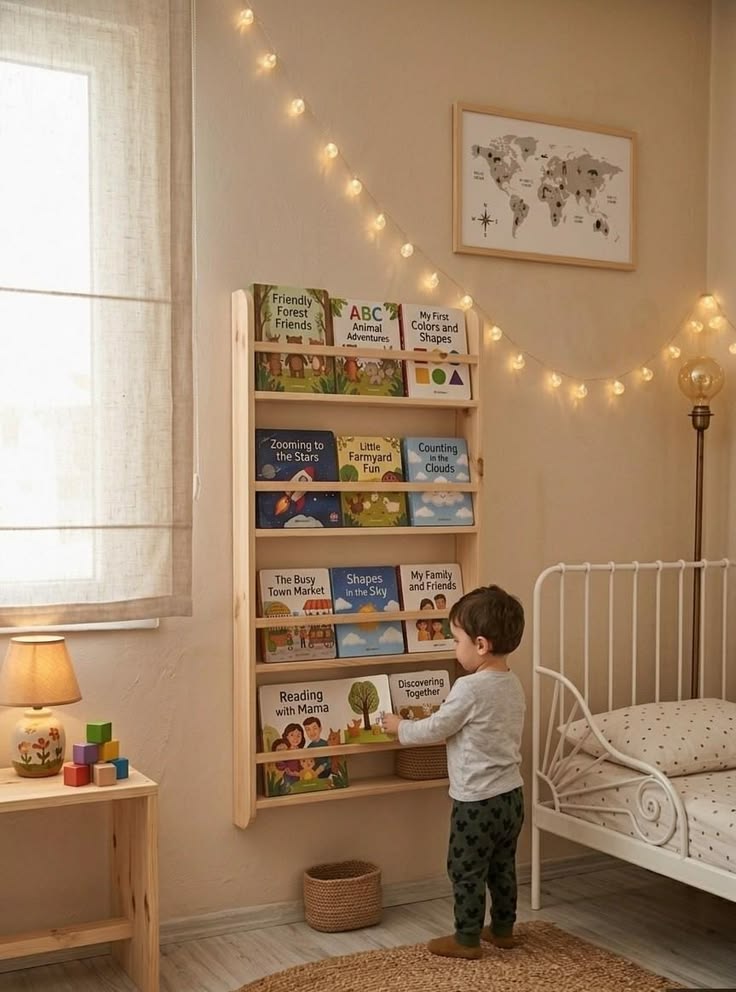
Staggered, stair-step wall shelves create a playful, gallery-like display for children’s books while taking up almost no floor space. Because each shelf sits at a slightly different height, the arrangement naturally draws a child’s eye and makes browsing feel like an adventure.
This works especially well above a headboard, along a narrow hallway, or on an empty wall in a playroom. Covers face forward, so younger children can choose books by image rather than title.
Mount shelves at heights your child can comfortably reach on their own, and keep the most-loved titles on the lowest shelf for easy independent access.
Because this setup relies entirely on vertical wall space, it’s ideal for apartments or smaller homes — the same space-conscious thinking behind these toddler classroom decoration ideas, which tackle similar challenges in shared learning spaces where every wall has to earn its keep.
10. Fabric Bins on Open Shelving
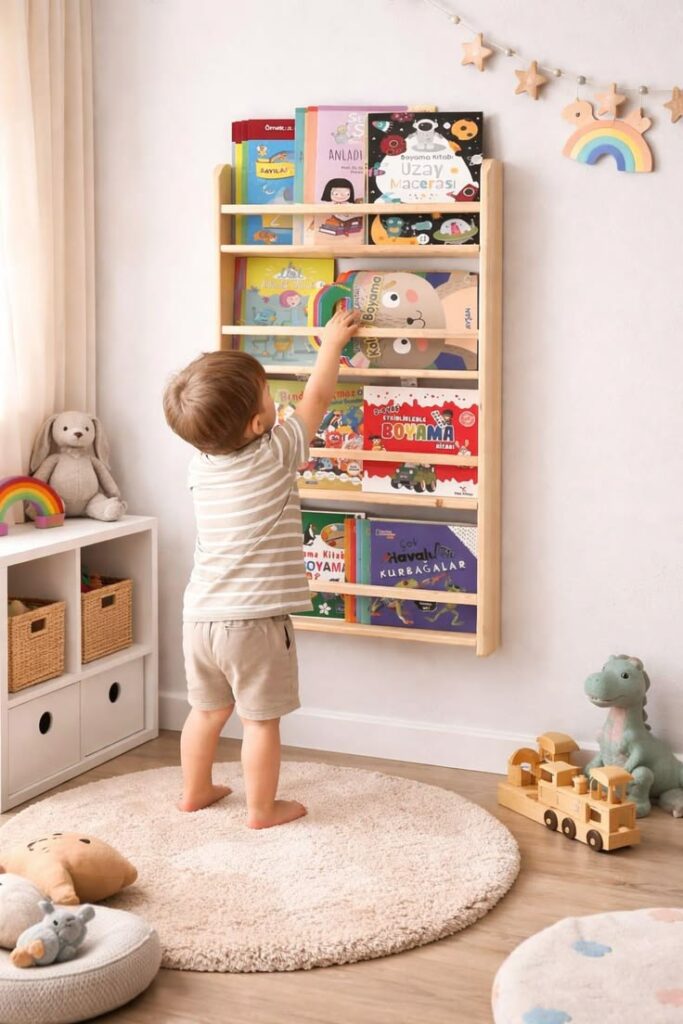
Pairing simple open shelving with soft fabric bins gives you the best of both worlds: visible organization plus a forgiving system for books that don’t stand up neatly on their own, like floppy paperbacks or worn favorites.
Assign each bin a category, whether by subject, series, or reading level, so cleanup becomes an easy sorting game rather than a chore. This method is particularly forgiving for younger kids who aren’t ready for precise, spine-facing shelving.
Choose bins with cutout handles so small hands can pull them without tipping the whole thing over, and keep the heaviest bins on lower shelves for stability.
This approach adapts well to classrooms, playrooms, and shared bedrooms alike, since the bins can be swapped, added, or removed as book collections grow.
11. A Rotating Book Basket by the Bed
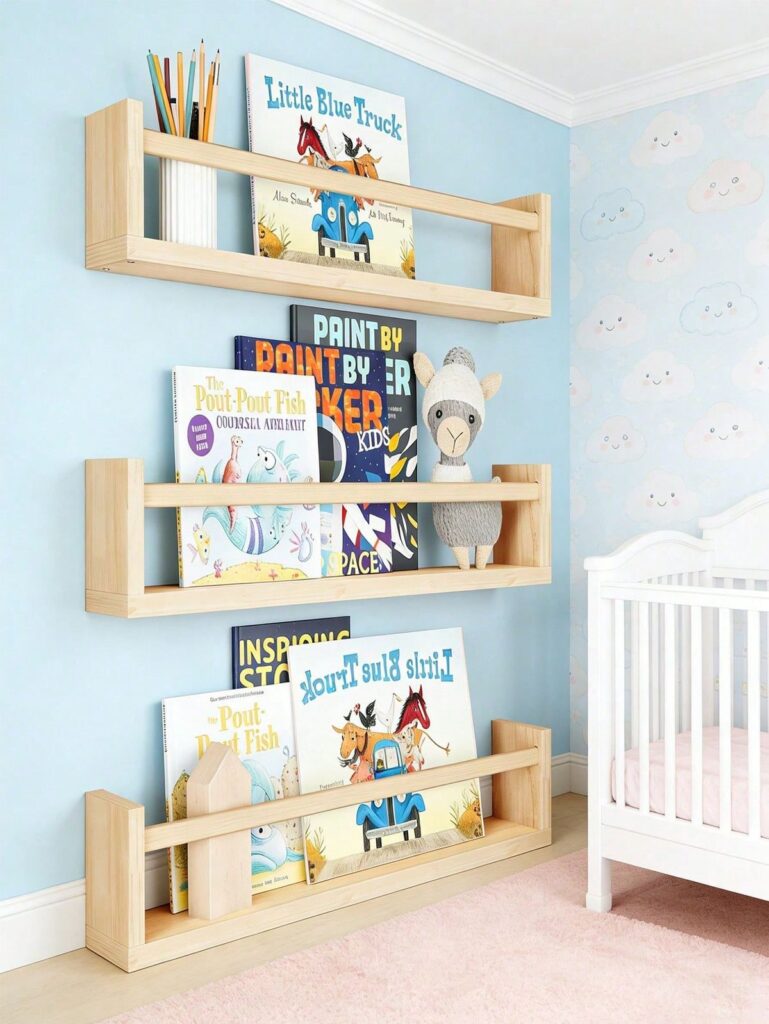
Sometimes the simplest solution works best. A single woven basket beside the bed, holding just five or six current favorites, keeps bedtime reading simple without requiring a large storage system at all.
This idea is especially useful for very small rooms or shared bedrooms where a full shelving unit isn’t practical. Swap out the basket’s contents weekly so your child always has something to look forward to at bedtime.
Choose a basket with soft or rounded edges for safety near the bed, and keep it light enough for your child to carry to a reading chair or nook independently.
Small, curated collections like this also make it easier to notice when a well-loved book needs replacing, and they naturally encourage children to finish and return books before choosing a new one, an easy way to build lifelong reading and tidying habits together.
Keeping It All Organized Long-Term
Once you’ve picked a system or combination of systems, a few small habits go a long way. Sorting books by category, size, or reading level makes it easier for kids to find and return titles on their own.
Rotating books seasonally, rather than trying to display an entire collection at once, keeps shelves from feeling overwhelming and helps a small space feel bigger than it is. It also gives children the joy of “rediscovering” old favorites.
Finally, involve your child in the process. Letting them help choose bins, labels, or shelf arrangement builds a sense of ownership, which makes them far more likely to keep the system going without constant reminders.
Small spaces don’t have to mean sacrificing an organized, book-loving environment for your child. With the right mix of shelving, bins, and a bit of wall space, you can build a system that grows with your family and makes reading time something kids look forward to, not something they have to dig through a pile to find.


