

A classroom is more than a place where students learn lessons, complete assignments, and prepare for exams. It is also a space where children experience emotions, challenges, frustrations, excitement, and moments when they need help managing their feelings. This is why many modern classrooms are introducing calming corners to support emotional regulation and create a more positive learning environment.
A well-designed calming corner gives students a safe place to pause, reflect, and regain control when emotions become overwhelming. These spaces are not about punishment or removing students from learning; instead, they teach valuable skills like self-awareness, patience, and emotional control.
The best classroom calming corner ideas combine comfort, creativity, and practical tools that help students calm their minds. With thoughtful design choices, teachers can create a peaceful area that supports student well-being while improving classroom behavior and focus.
Whether you have a large classroom or a small teaching space, a calming corner can be adapted to fit your needs. From cozy seating areas to sensory activities and mindfulness tools, these ideas can help transform stressful moments into opportunities for growth and learning.
1. Create a Cozy Reading and Relaxation Corner
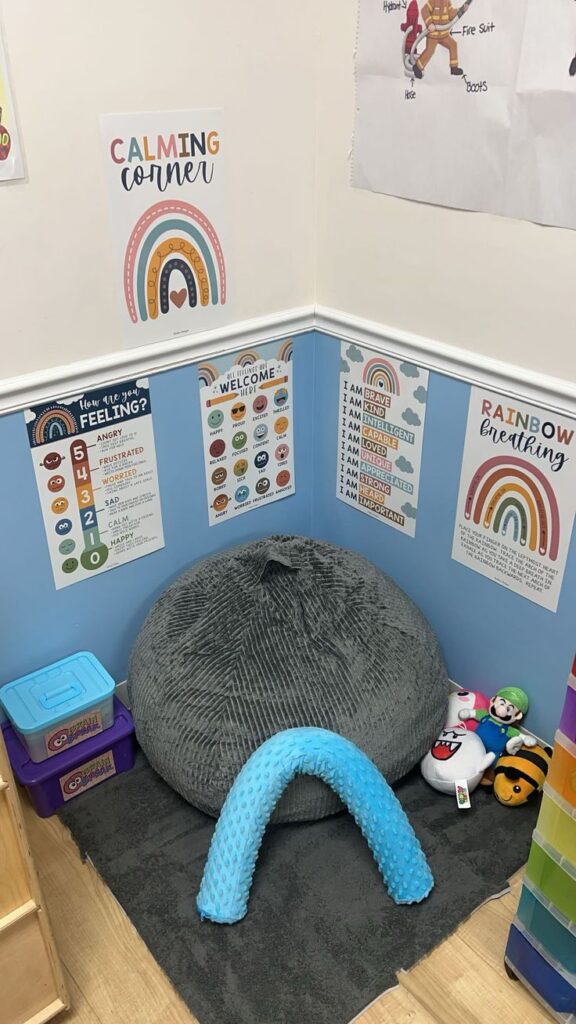
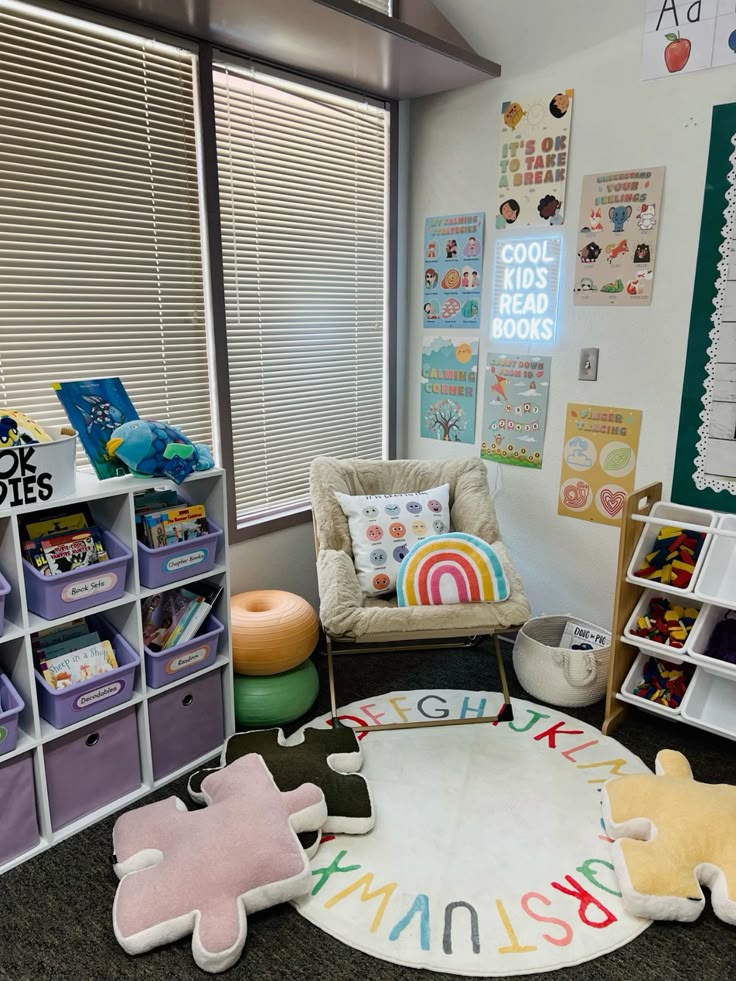
One of the easiest classroom calming corner ideas is creating a comfortable reading area where students can slow down and enjoy quiet time. A peaceful corner with soft seating, books, and calming decorations can immediately make the classroom feel more welcoming.
Teachers can add floor cushions, small rugs, bean bags, or comfortable chairs to make the space feel separate from the busy classroom environment. Choose books that encourage emotional learning, kindness, confidence, and problem-solving.
This area can become a place where students take a few minutes to relax after a difficult moment. Reading quietly helps children redirect their attention and develop healthier ways to handle stress.
Adding simple classroom organization elements can also improve the overall environment. Teachers looking for inspiration can explore ideas like these school office decorating ideas to create a more organized and visually calming learning space.
2. Add a Feelings Check-In Station
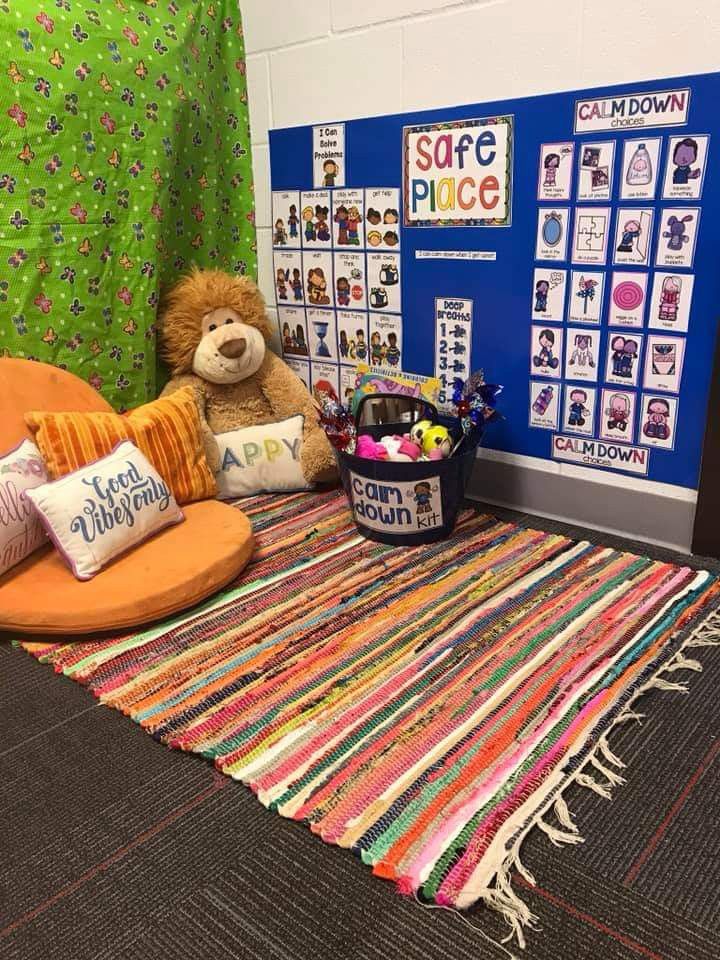
A feelings check-in station helps students recognize and communicate their emotions before frustration grows. Many children struggle to explain how they feel, so visual tools make emotional expression easier.
Create a board with different emotions such as happy, tired, frustrated, worried, or excited. Students can move their name, clip, or marker to the feeling that matches their mood.
This simple activity teaches emotional awareness and encourages students to understand that all feelings are normal. Over time, students become better at identifying emotions and choosing appropriate ways to respond.
Teachers can also use the station as a quick daily routine during morning meetings or after breaks.
3. Design a Sensory-Friendly Calming Space
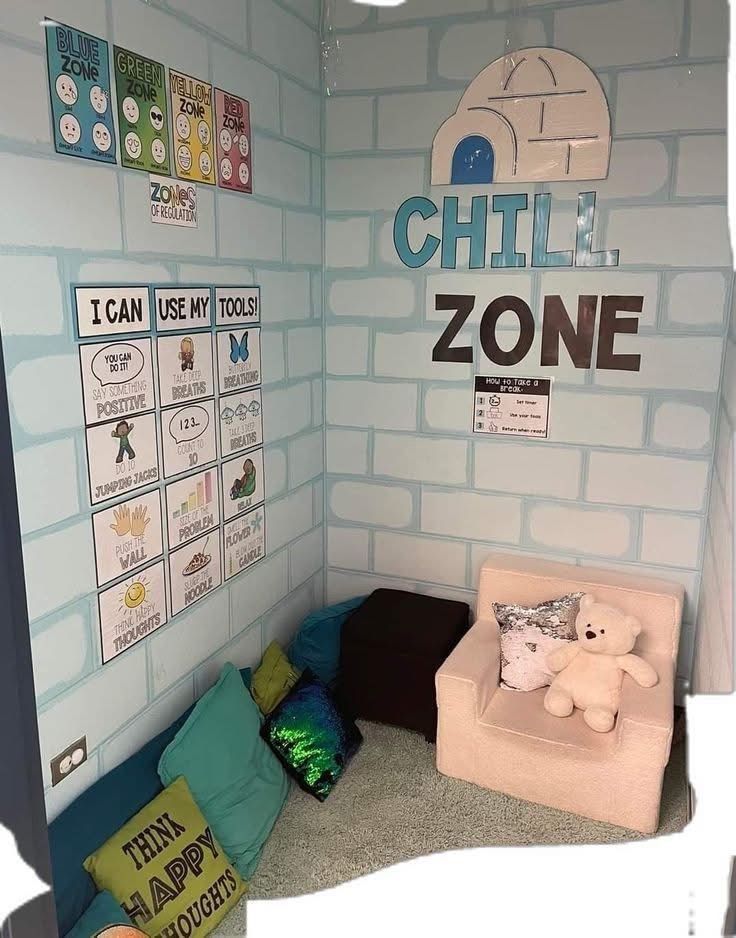
Sensory tools can be extremely helpful for students who become overwhelmed by noise, movement, or strong emotions. A sensory-friendly calming corner provides activities that help students feel grounded and relaxed.
Consider adding items such as stress balls, textured objects, sensory bottles, breathing cards, or quiet fidget tools. These resources give students a healthy outlet when they need a moment to reset.
The key is keeping the area simple and organized. Too many items can create distraction instead of calm, so choose a small collection of helpful tools.
A thoughtful sensory space supports different learning needs and helps students return to classroom activities feeling more prepared.
4. Include Breathing and Mindfulness Activities
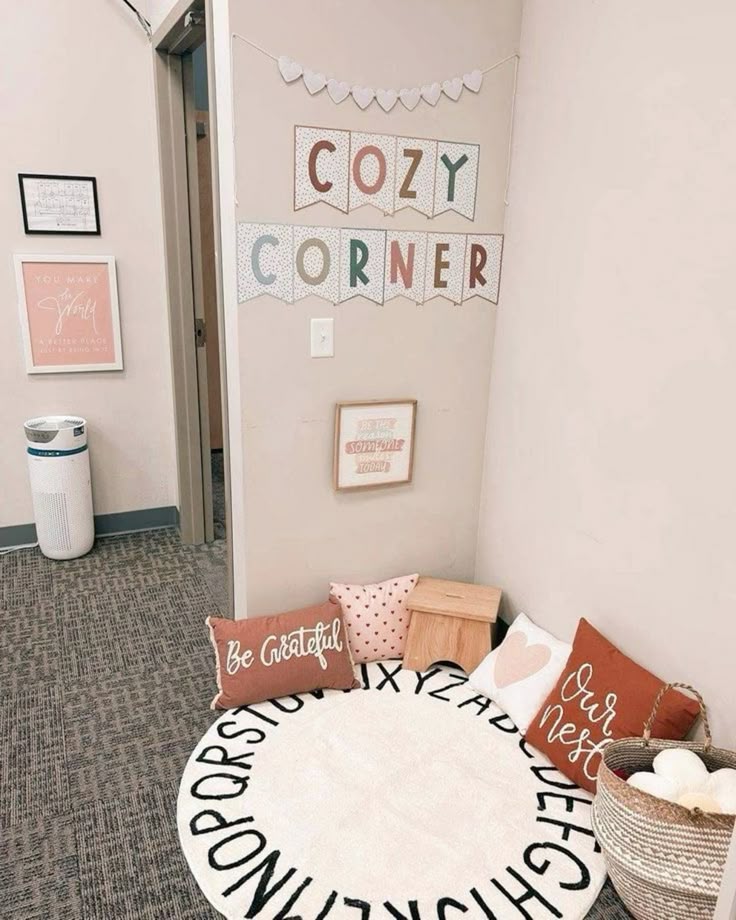
Teaching students how to calm their breathing is one of the most useful skills a calming corner can provide. Simple breathing exercises help reduce stress and allow students to regain focus during challenging moments.
Teachers can display breathing techniques using colorful posters or step-by-step cards. Examples include “smell the flower, blow the candle” breathing or counting slowly while taking deep breaths.
A small timer or mindfulness guide can help students practice these techniques independently. These habits can improve concentration and emotional control throughout the school day.
Mindfulness activities do not need to take long. Even two or three minutes of intentional breathing can make a noticeable difference.
5. Create a Positive Affirmation Wall
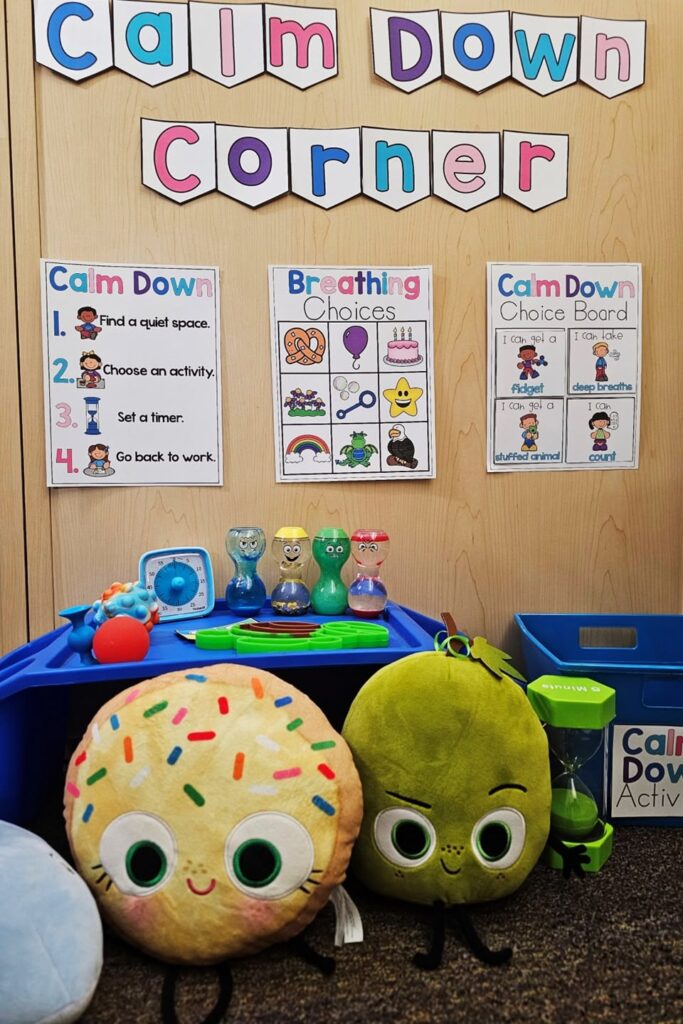
A positive affirmation wall adds encouragement and confidence to a classroom calming corner. Students often need reminders that mistakes, challenges, and difficult emotions are part of learning.
Teachers can display messages like “I can try again,” “My feelings are temporary,” or “I am learning every day.” These statements help children develop a stronger and more positive mindset.
Students can also create their own affirmations and add them to the wall. This makes the calming corner more personal and encourages ownership of the space.
Over time, these positive reminders can help students build self-confidence and emotional resilience.
6. Add a Quiet Art and Creativity Area
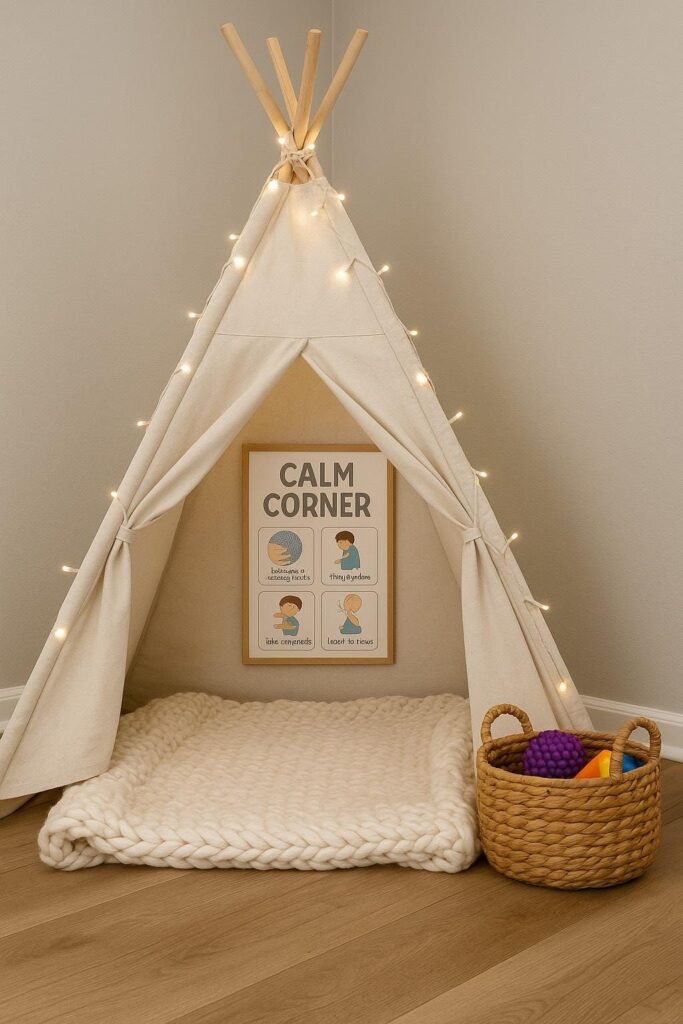
Creative activities can be a powerful way for students to express emotions without needing to explain everything verbally. A small art section inside a calming corner allows children to relax through drawing, coloring, and creative expression.
Provide simple supplies such as coloring pages, pencils, journals, or blank paper. Encourage students to draw how they feel or create something that represents their emotions.
Art activities help shift attention away from stressful thoughts and encourage relaxation. They also give teachers another way to understand what students may be experiencing.
A creativity-focused calming corner can be especially useful for younger students who communicate better through pictures than words.
7. Use a Calm-Down Toolkit With Helpful Resources
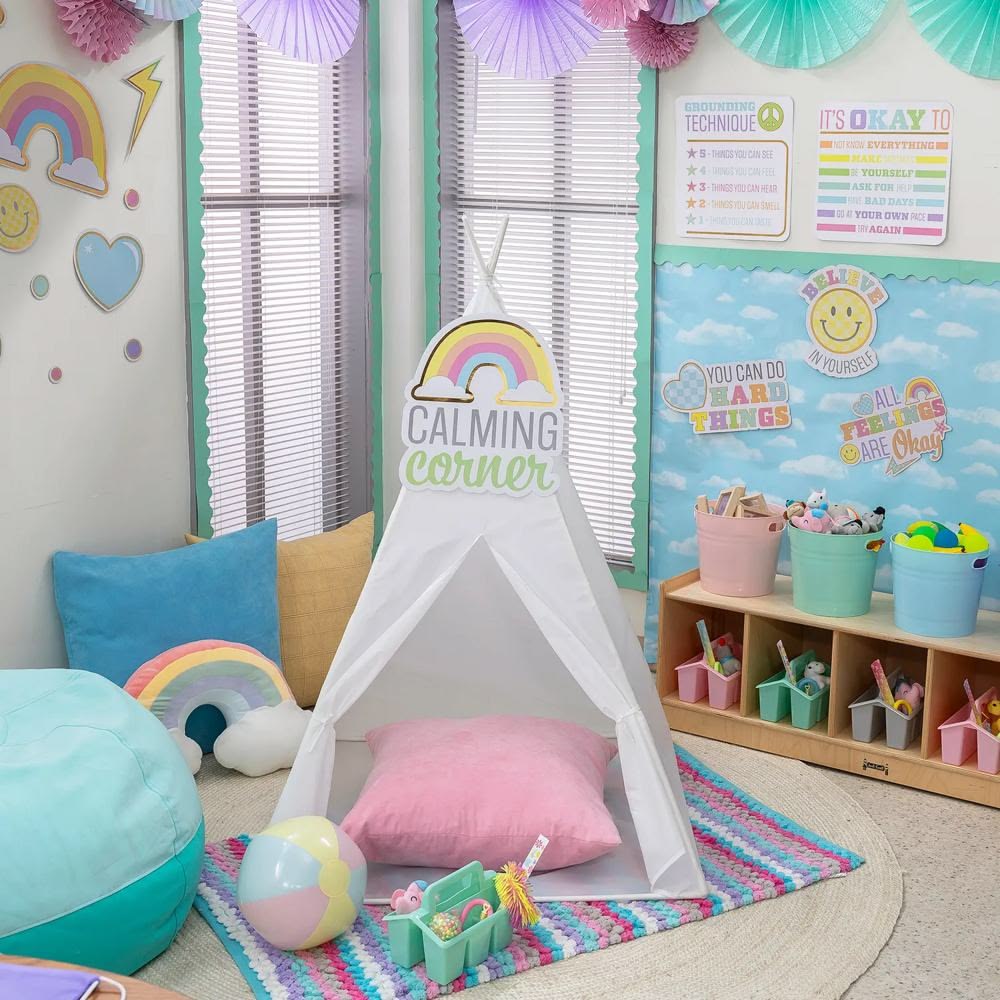
A calm-down toolkit is one of the most practical additions to any classroom calming corner. This collection of simple resources gives students different ways to manage emotions depending on what they need in the moment.
A toolkit can include breathing cards, emotion charts, journals, coloring materials, stress balls, positive reminder cards, and small sensory items. The goal is to provide options that encourage students to choose a calming strategy that works best for them.
Teachers can introduce each tool and explain how it should be used. When students understand the purpose behind each resource, they are more likely to use the calming corner responsibly.
A calm-down toolkit also helps children develop independence. Instead of waiting for an adult to solve every emotional challenge, students learn how to recognize their feelings and use helpful strategies.
8. Create a Nature-Inspired Calming Corner
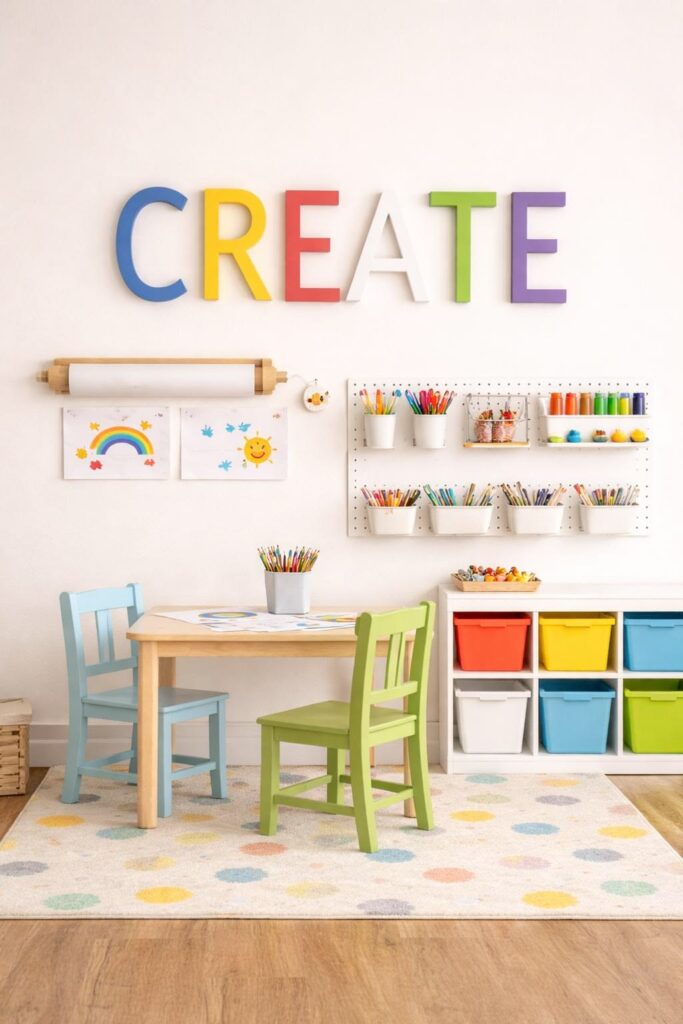
Nature elements can instantly make a classroom feel more peaceful and relaxing. Adding natural colors, plants, nature pictures, or outdoor-inspired decorations can create a calming atmosphere for students.
A small plant shelf, nature posters, wooden textures, or images of peaceful landscapes can make the space feel more connected to the outdoors. These details help create a relaxing environment without requiring a large budget.
Teachers can also include activities related to nature, such as observing plants, using nature-themed coloring pages, or practicing mindfulness by imagining peaceful outdoor places.
A nature-inspired calming area encourages relaxation while adding beauty and warmth to the classroom.
9. Add a Reflection and Journaling Space
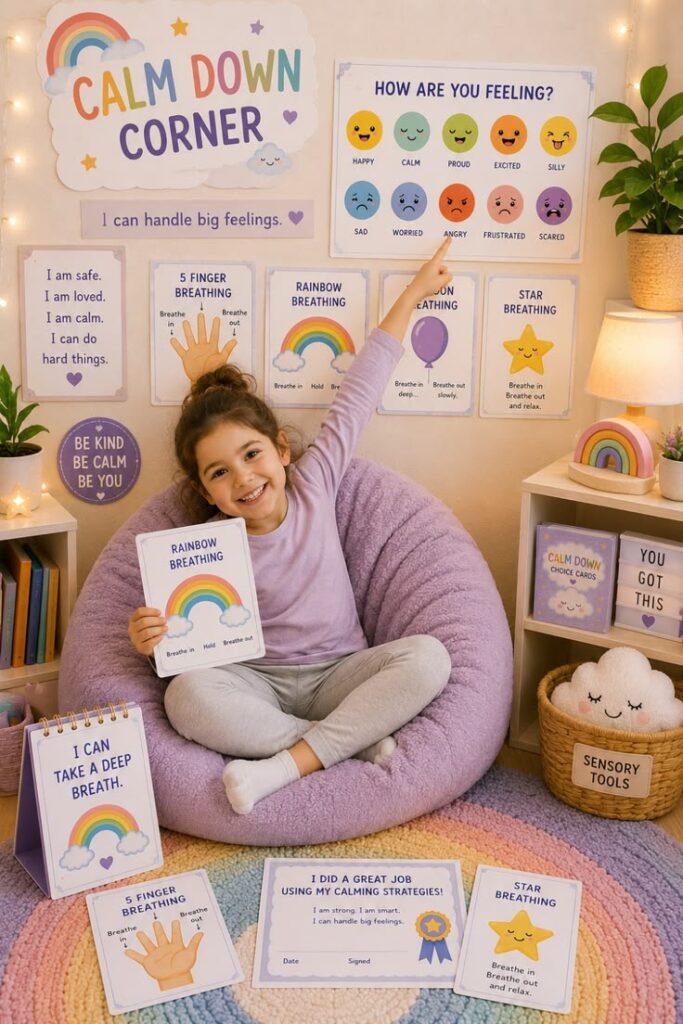
A reflection area gives students a private opportunity to think about their emotions and experiences. Writing helps children organize their thoughts and understand what they are feeling.
Place notebooks, journals, or reflection sheets in the calming corner where students can write or draw during quiet moments. Prompts like “What happened?” or “What can I do differently next time?” can guide their thinking.
This practice helps students develop problem-solving skills and emotional awareness. Over time, journaling can become a valuable tool for managing frustration and improving self-expression.
Teachers can keep this space optional and supportive rather than making it feel like an assignment.
10. Create a Comfortable Floor Seating Area
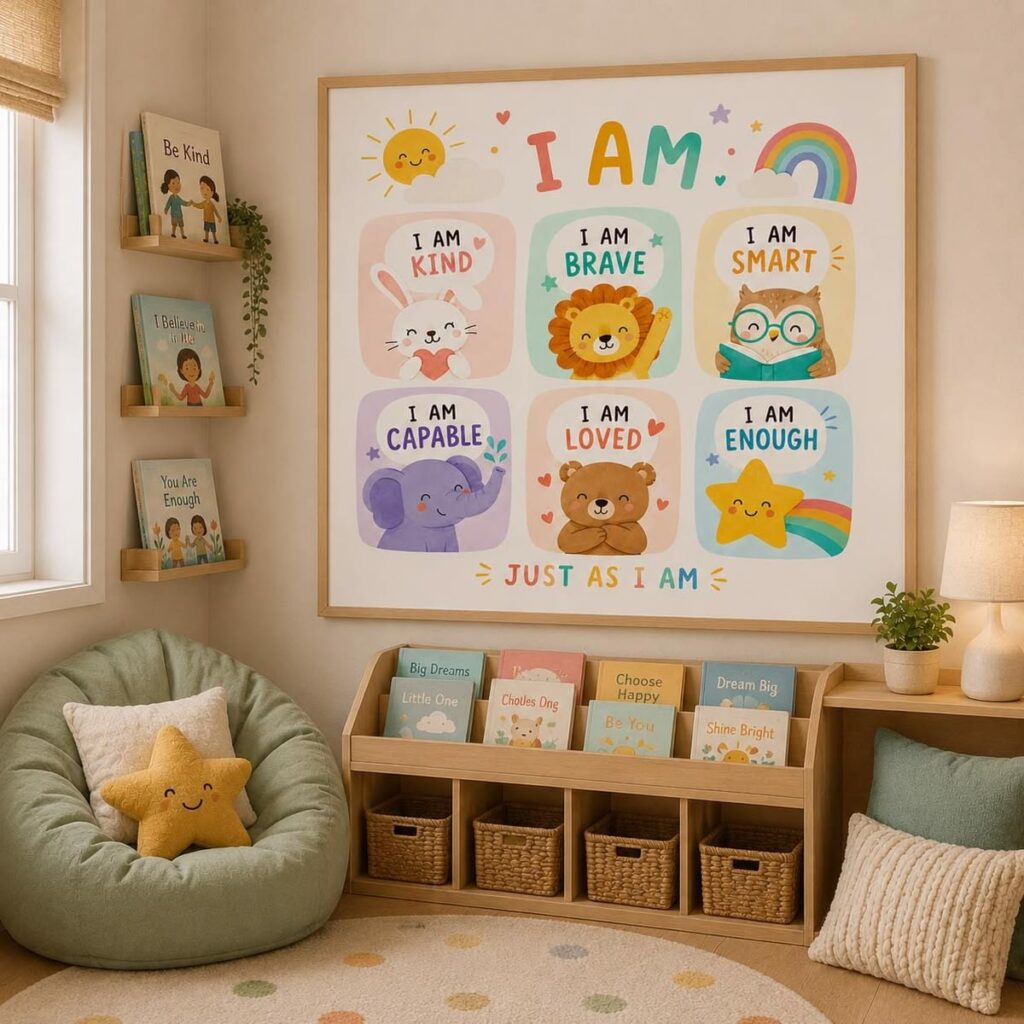
A comfortable floor seating arrangement can make a calming corner feel more inviting and separate from the traditional classroom setup. Students often relax better in a space that feels different from their regular desks.
Use soft rugs, cushions, pillows, or low seating options to create a cozy environment. These elements can make the corner feel like a peaceful retreat where students can take a short break.
The design does not need to be expensive. Even a small corner with a soft mat and a few comfortable items can create a meaningful calming space.
Teachers can also use this area for small group conversations, emotional check-ins, or quiet independent activities.
11. Add Visual Calm-Down Strategies
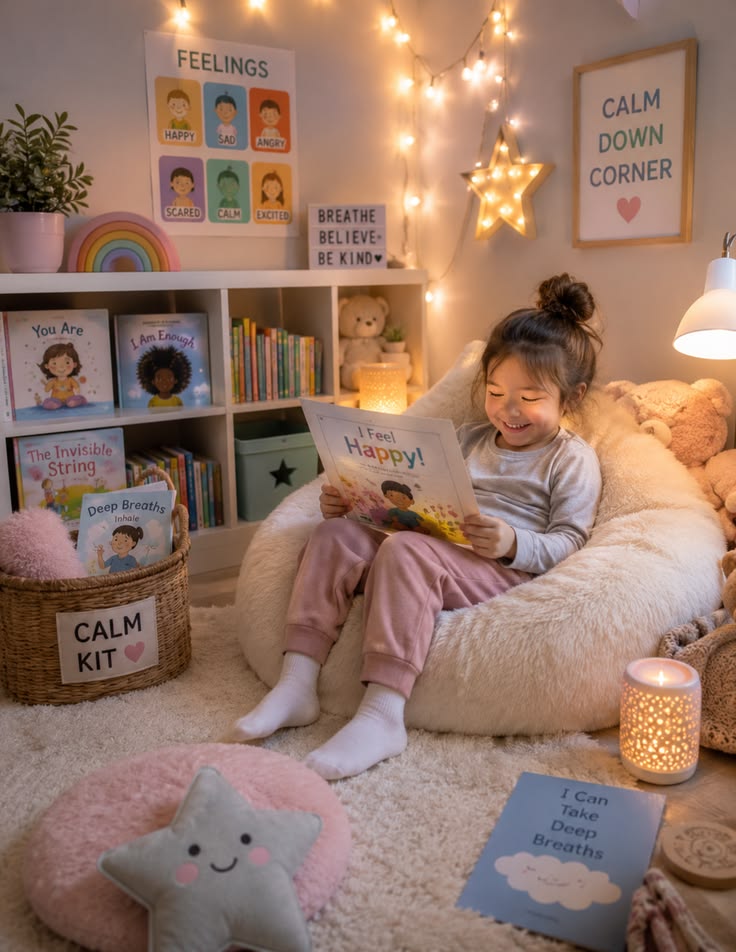
Visual tools are especially helpful for younger students or children who struggle to process emotions during stressful moments. A calming corner should include clear reminders of what students can do when they feel overwhelmed.
Examples include step-by-step breathing guides, emotion charts, calming choices, and simple problem-solving steps. These visuals help students remember strategies when they need them most.
Instead of telling students to “calm down,” teachers can guide them toward specific actions. This creates a more supportive and respectful approach to emotional challenges.
A well-designed visual system makes the calming corner easier for students to use independently.
12. Design a Small Multi-Purpose Peaceful Space
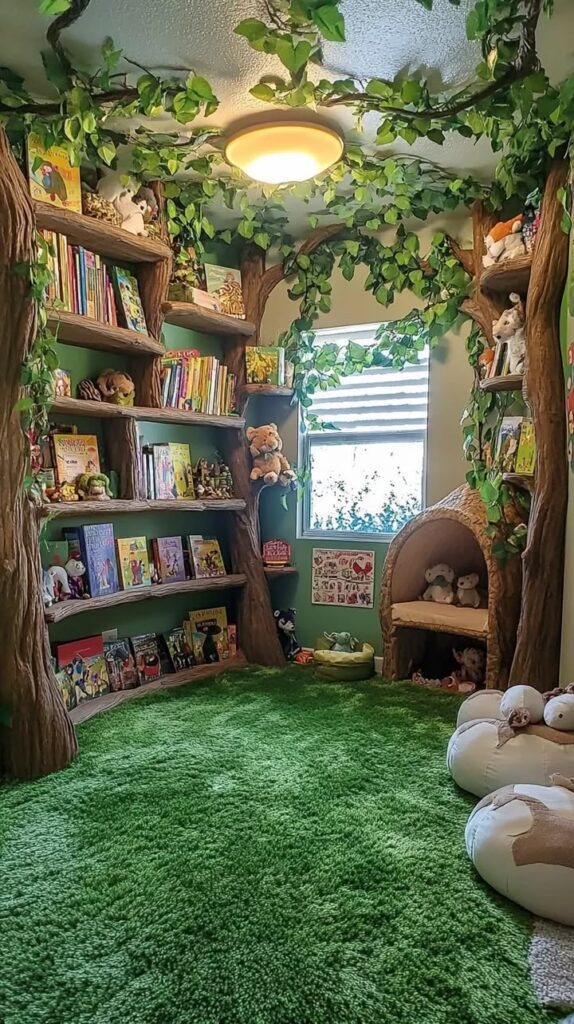
Not every classroom has a large area available for a calming corner. A small, carefully planned space can still provide major benefits for students.
Teachers can use a corner near a bookshelf, an unused wall area, or a small section of the classroom. The focus should be creating a peaceful environment rather than having a large amount of space.
Simple additions like a small chair, calming posters, a basket of resources, and soft lighting can transform an ordinary corner into a supportive emotional space.
For classrooms with limited space, organization is important. Creative storage solutions and smart layouts can help maximize the available area. Teachers can find more small-space inspiration through ideas like these sewing room ideas for small spaces, which show how thoughtful design can make compact areas functional.
13. Let Students Help Design the Calming Corner
One of the best ways to make a classroom calming corner successful is involving students in the design process. When children contribute ideas, they feel connected to the space and understand that it belongs to everyone.
Ask students what helps them feel calm, what colors they like, or what activities they would find helpful. Their feedback can provide valuable insight into what will make the area more effective.
Students can create decorations, make emotion cards, or help organize materials. This involvement builds responsibility and encourages students to respect the calming corner.
A student-created space often becomes more meaningful because it reflects the needs and personalities of the classroom community.
Tips for Creating an Effective Classroom Calming Corner
Creating a successful calming corner requires more than simply placing a few items in a classroom. The space should be intentional, easy to use, and connected to emotional learning.
Keep these tips in mind when designing your classroom calming area:
Choose a quiet location: Place the calming corner somewhere that feels peaceful but still allows students to remain connected to the classroom.
Avoid making it feel like punishment: A calming corner should never be viewed as a “time-out” area. It should feel like a supportive place where students can reset and return ready to learn.
Teach students how to use it: Explain the purpose of the space and demonstrate calming strategies before expecting students to use it independently.
Keep materials organized: Too many items can make the space overwhelming. Select a few useful tools and rotate activities when needed.
Make it welcoming: Use comfortable seating, positive messages, and thoughtful decorations to create an environment where students feel safe.
Update the space regularly: Student needs change throughout the year, so refresh materials and ask for feedback to keep the corner effective.
Conclusion
Classroom calming corners provide students with more than just a quiet place to sit. They create opportunities for children to understand their emotions, develop self-control, and learn healthier ways to handle challenges.
The best classroom calming corner ideas focus on comfort, emotional support, and practical strategies that students can use every day. Whether you create a sensory area, reading nook, reflection space, or creative corner, even small changes can have a big impact.
A peaceful classroom environment helps students feel supported, confident, and ready to learn. By creating a calming corner, teachers can build a classroom where emotions are respected and every student has the tools to succeed.


