

Creating a sewing room in a small home can feel challenging when every square foot matters. Between fabric collections, sewing machines, cutting supplies, and storage bins, it is easy for a compact area to become cluttered and difficult to use.
The good news is that thoughtful design can transform even the tiniest corner into a functional and inspiring creative retreat. With the right combination of organization, furniture, lighting, and décor, small sewing room ideas can help you maximize every inch while keeping your space stylish and productive.
Whether you have an entire spare room, a closet conversion, or a dedicated corner in another room, these sewing room organization ideas will help you create a space that feels bigger, brighter, and easier to work in. Many of these concepts are also highly Pinterest-worthy, combining practicality with beautiful visual appeal.
1. Create a Dedicated Sewing Corner
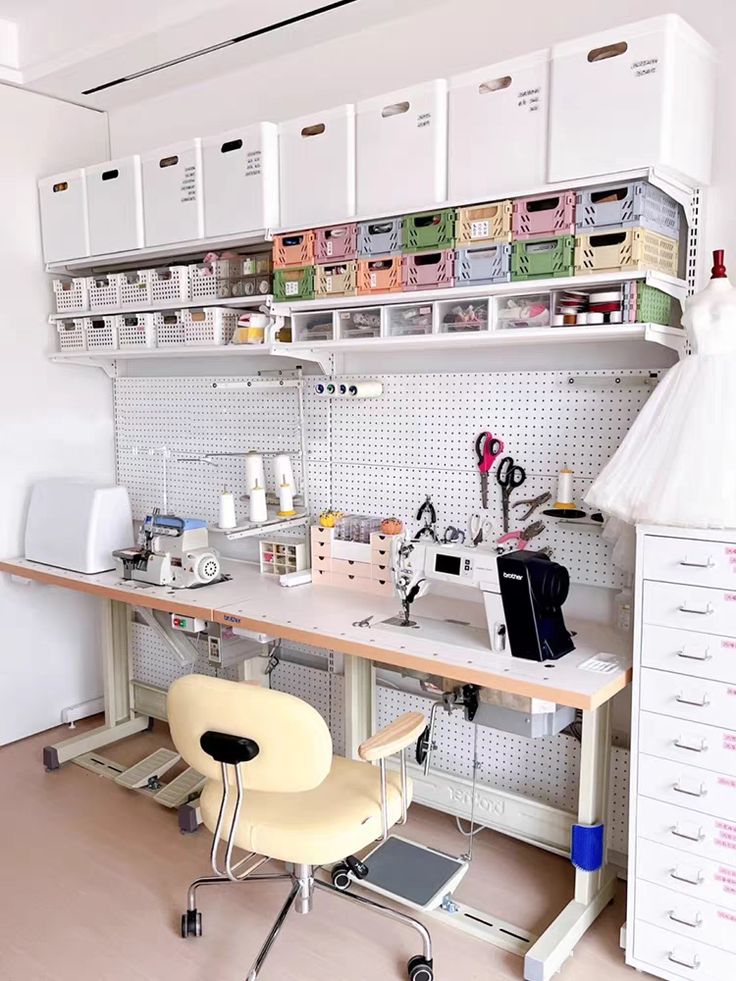
A dedicated sewing corner can instantly make your workspace feel organized, even if you do not have a separate room. Choose an unused corner in a bedroom, office, or living area and designate it specifically for sewing activities.
A small desk paired with floating shelves can provide everything you need without taking up much floor space. This is one of the most effective sewing corner ideas because it creates clear boundaries while maintaining flexibility.
Make It Feel Intentional
Add a corkboard, framed inspiration prints, or a small pegboard above the desk. These decorative touches help transform a simple corner into a creative destination.
Pinterest-inspired sewing corners often feature coordinated storage containers and color palettes. This simple styling trick makes compact sewing spaces feel polished and inviting.
2. Use Vertical Storage to Maximize Wall Space
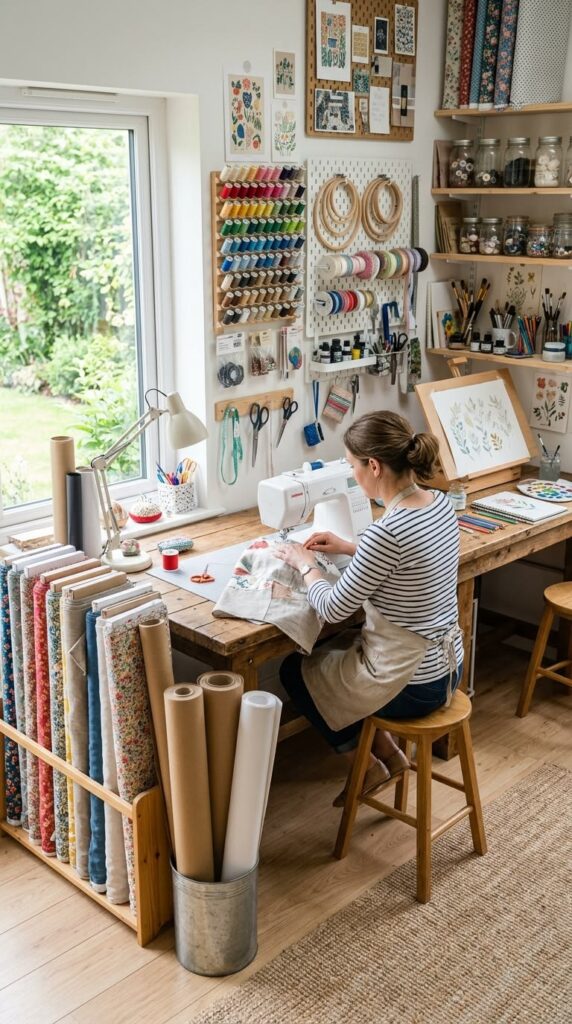
When floor space is limited, walls become your greatest asset. Vertical storage keeps supplies accessible while freeing up valuable work surfaces.
Install floating shelves above your sewing table to store fabric bins, baskets, and sewing books. This approach is one of the smartest sewing room storage ideas because it utilizes space that would otherwise remain unused.
Pegboards for Everyday Tools
Pegboards are ideal for scissors, rulers, measuring tapes, and thread spools. Keeping tools visible reduces clutter and saves time during projects.
Arrange pegboard accessories in a visually pleasing layout to create a decorative focal point. Function and style can easily work together in a small sewing room.
3. Choose a Fold-Down Sewing Table
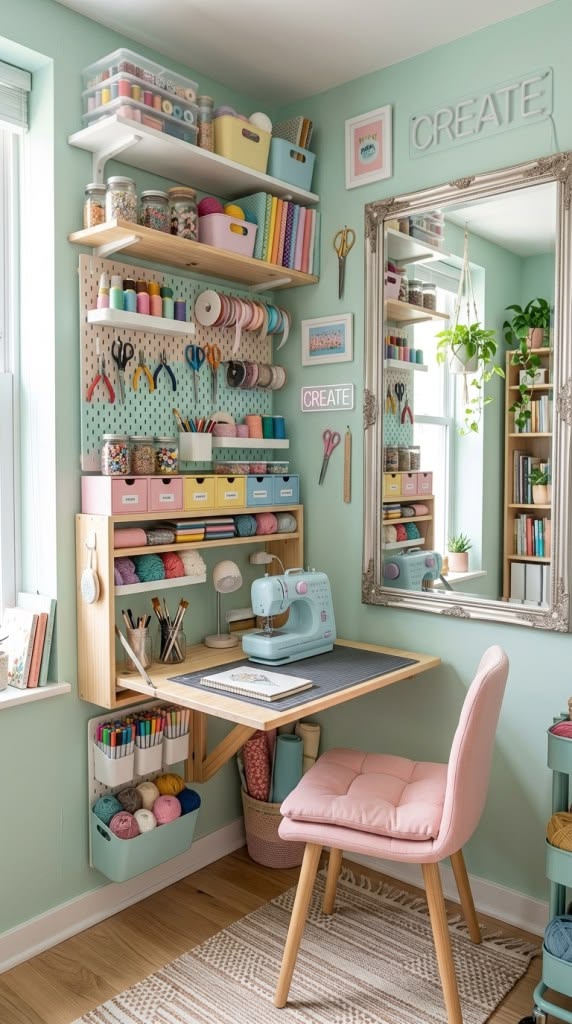
Large sewing tables are not always practical in compact spaces. A fold-down table offers a full work surface when needed and disappears when not in use.
Wall-mounted folding desks are particularly useful for apartments and multipurpose rooms. They provide flexibility without permanently sacrificing square footage.
Perfect for Multi-Use Rooms
Many homeowners combine sewing areas with guest rooms or home offices. A fold-away workstation allows the room to serve multiple purposes comfortably.
This solution is especially valuable for anyone searching for sewing craft room ideas that balance creativity and everyday living.
4. Organize Fabric by Color and Category
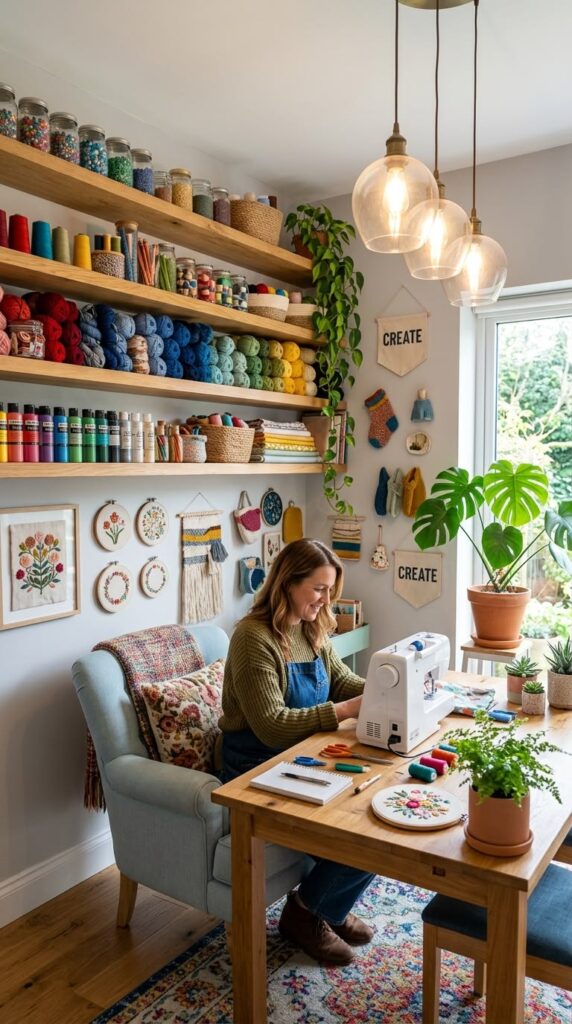
Fabric can quickly become the largest source of clutter in a sewing space. Organizing materials by color and type makes projects easier while creating beautiful visual displays.
Clear bins, open shelving, and labeled baskets work especially well in small spaces. You can instantly see what you own without digging through stacks of fabric.
Turn Storage Into Decor
Neatly folded fabric arranged by color creates a rainbow-inspired display that looks stunning on Pinterest. The organized appearance doubles as room decoration.
A well-organized fabric collection often makes a small room feel larger and calmer. Visual order creates a sense of spaciousness.
5. Add a Rolling Storage Cart
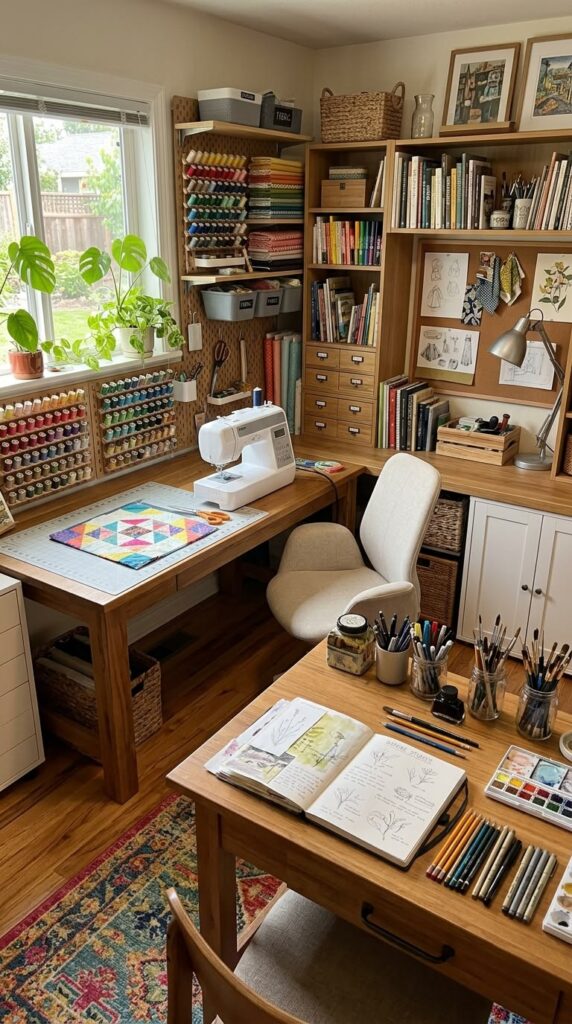
A rolling cart provides mobile storage that can move wherever you need it. This flexible solution is ideal for sewing rooms where every inch must serve multiple functions.
Store thread, needles, rotary cutters, patterns, and small accessories inside the cart. When not in use, simply tuck it beneath a desk or into a closet.
Create Project Zones
Dedicate each shelf to a different type of supply or project. This organization system reduces clutter and keeps materials easy to locate.
Many compact sewing space designs rely on rolling carts because they combine storage, convenience, and adaptability in one piece of furniture.
6. Install Bright Layered Lighting
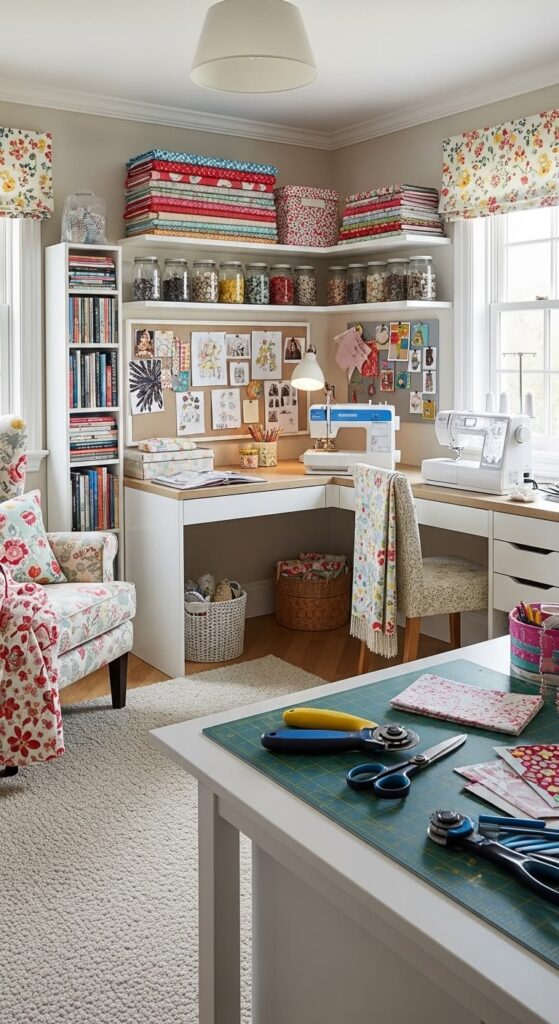
Good lighting is essential for accurate cutting, stitching, and detail work. Small rooms can often feel dark, especially if they have limited natural light.
Combine overhead lighting with task lamps positioned directly over your work area. This layered approach eliminates shadows and improves visibility.
Use Daylight Bulbs
Daylight-style bulbs provide more accurate color representation when working with fabrics and thread. They also help reduce eye strain during long sewing sessions.
Bright lighting makes a room feel more spacious while improving productivity. It is one of the easiest upgrades you can make in any sewing room.
7. Convert a Closet Into a Sewing Station
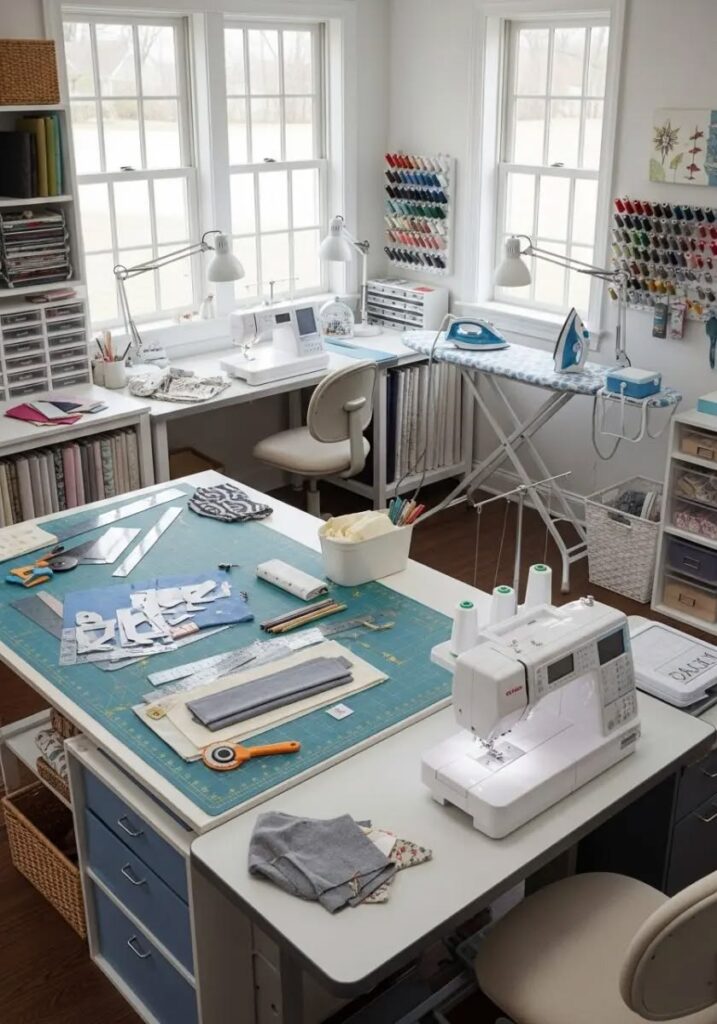
A closet can become a surprisingly effective sewing workspace. With a little planning, even a standard closet can function as a complete creative station.
Install a compact desk inside the closet and add shelving above for storage. When projects are finished, simply close the doors to hide everything neatly away.
The Ultimate Hidden Workspace
Closet sewing rooms are popular on Pinterest because they maximize small homes without sacrificing style. Everything remains organized yet completely concealed.
This approach is ideal for anyone who wants a dedicated sewing area without giving up an entire room.
8. Use Clear Containers and Labels
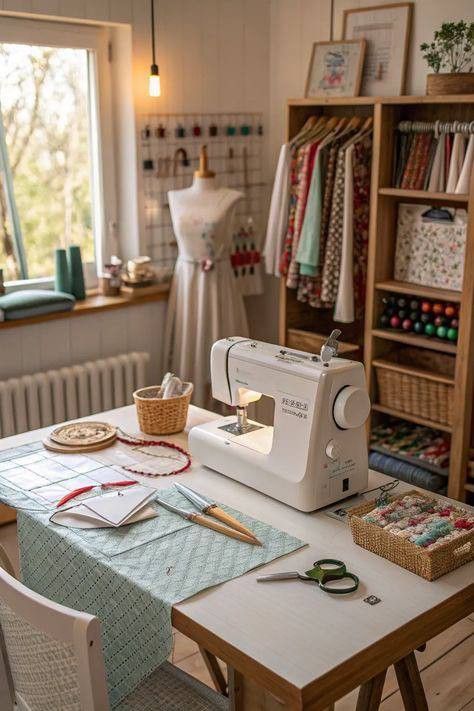
One of the simplest sewing room organization strategies is storing supplies in clear containers. Visibility helps you locate items quickly and reduces duplicate purchases.
Labels add another level of efficiency. Clearly marked containers keep thread, notions, trims, and patterns organized and easy to access.
Reduce Visual Clutter
Matching containers create a cohesive look throughout the room. Consistent storage systems make even small spaces feel more professional and intentional.
Pinterest-friendly craft rooms often rely on clear bins because they combine functionality with clean visual appeal.
9. Incorporate Multifunctional Furniture
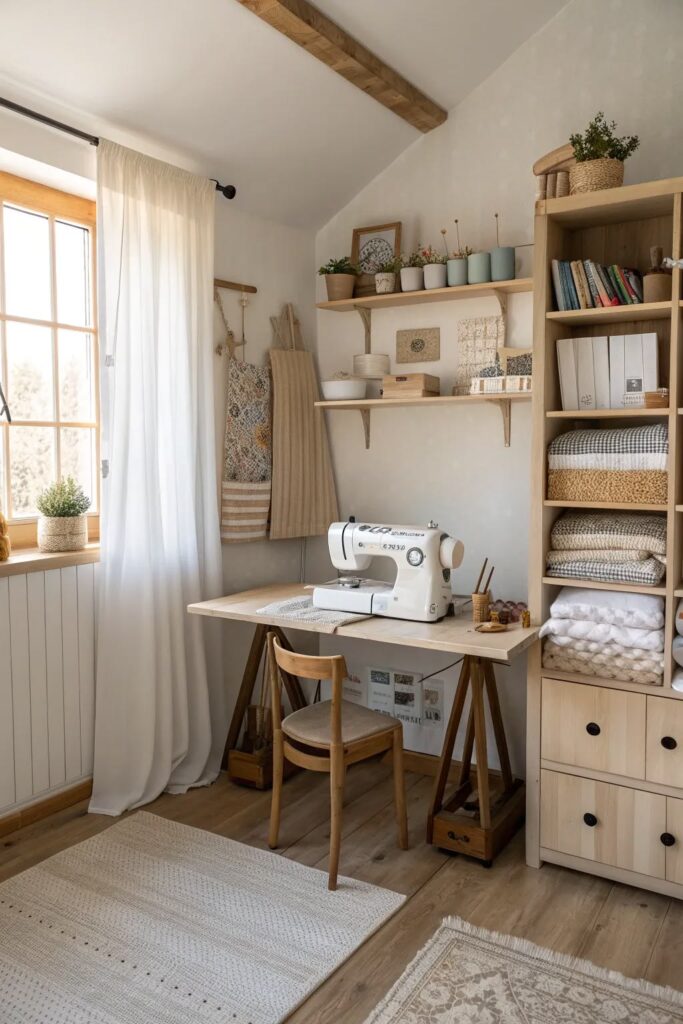
Furniture that serves multiple purposes is essential in small sewing rooms. Every piece should work as hard as possible.
Consider an ottoman with hidden storage, a desk with built-in drawers, or a cabinet that doubles as a cutting station. Multifunctional pieces maximize efficiency without crowding the room.
Think Beyond Traditional Furniture
Repurposed furniture can provide unique storage opportunities. Vintage dressers, bookshelves, and sideboards often work beautifully in sewing spaces.
Many creative makers use ideas borrowed from creative workspace decorating ideas to create efficient and attractive work environments.
10. Create a Compact Inspiration Wall
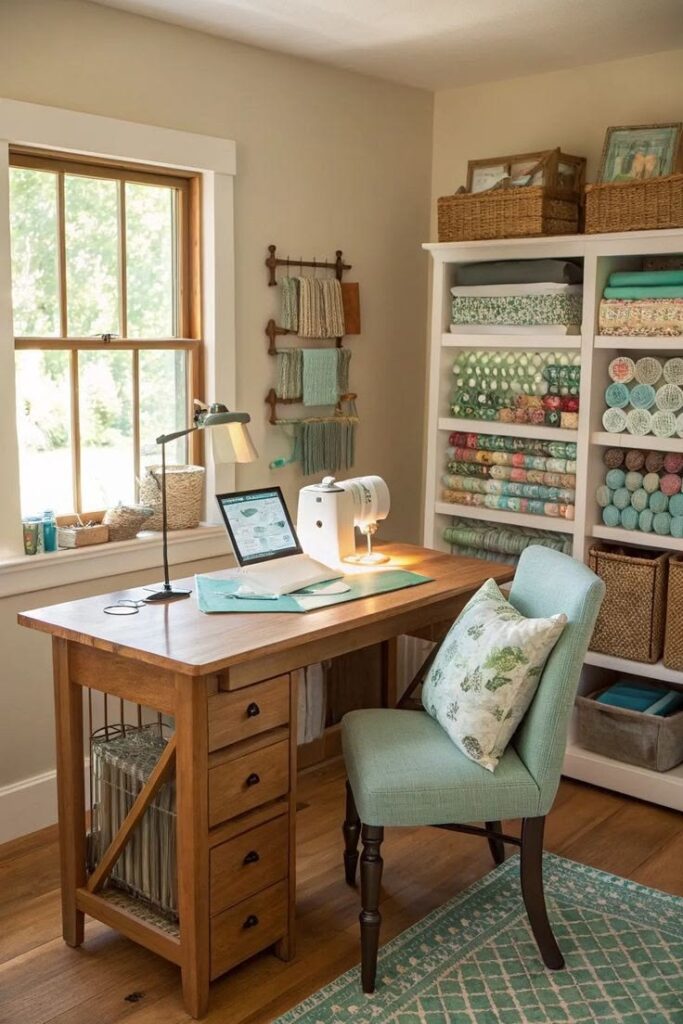
Every creative space benefits from inspiration. A small wall display can motivate new projects while keeping ideas organized.
Use a bulletin board, magnetic board, or framed wire grid to display fabric swatches, sketches, patterns, and photos. Keeping inspiration visible encourages creativity.
Keep It Curated
Avoid overcrowding the display with too many items. A carefully edited inspiration wall feels energizing rather than distracting.
Pinterest-worthy sewing rooms often feature simple mood boards that reflect personal style while maintaining visual balance.
11. Decorate With Style Without Adding Clutter
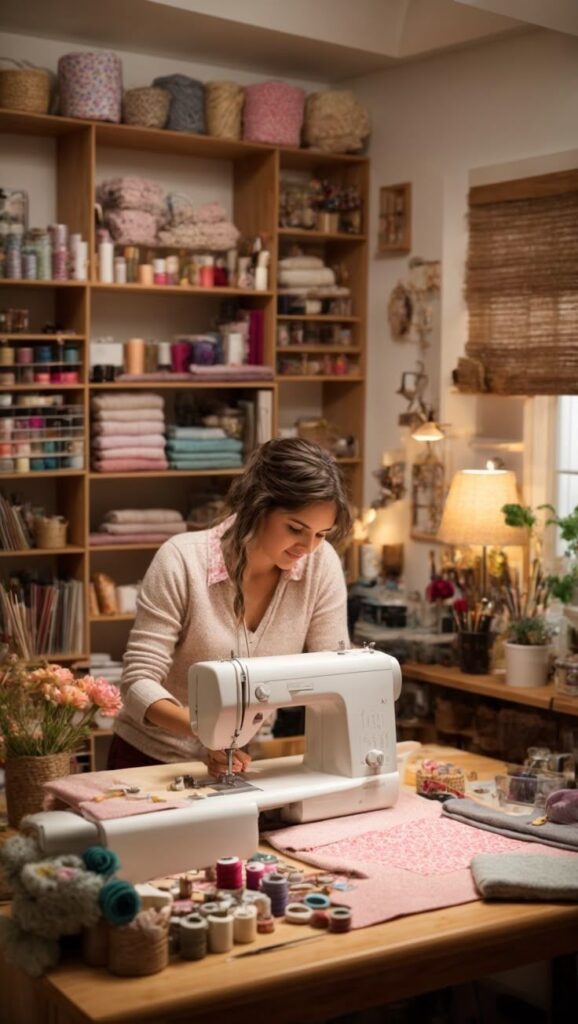
Decorating a small sewing room does not require large accessories or excessive décor. Focus on meaningful pieces that add personality without consuming valuable space.
Framed artwork, decorative storage baskets, and a small plant can make the room feel warm and inviting. The goal is to create a space that encourages creativity.
Use Color Strategically
Light wall colors help small rooms feel larger and brighter. Soft neutrals combined with colorful fabric displays create a balanced and cheerful atmosphere.
For additional inspiration on arranging functional spaces, exploring examples of smart entertaining and layout inspiration can provide useful ideas for maximizing room flow.
Also Read: Grazing Table Ideas for 50 People Weddings
Small Sewing Room Tips
Prioritize Frequently Used Tools
Keep your most-used supplies within easy reach. Daily essentials should never require digging through multiple storage bins.
Declutter Regularly
Small spaces benefit from frequent organization sessions. Donate unused materials and remove supplies you no longer need.
Utilize Door Space
The back of a door offers valuable storage opportunities. Hanging organizers can hold scissors, rulers, patterns, and other lightweight tools.
Choose Light Colors
Light walls, furniture, and storage containers reflect more light. This simple design choice can make compact sewing spaces feel significantly larger.
Keep Surfaces Clear
A clutter-free worktable improves productivity and reduces stress. Store tools immediately after use to maintain an organized environment.
Create Dedicated Zones
Even in a small room, assigning separate areas for cutting, sewing, pressing, and storage helps streamline your workflow. Clear zones make projects feel more manageable.
Conclusion
A small sewing room does not have to limit your creativity. With thoughtful planning, smart storage solutions, and carefully chosen furniture, even the tiniest workspace can become highly functional and beautifully organized.
These small sewing room ideas prove that style and practicality can coexist in compact spaces. By maximizing vertical storage, embracing multifunctional furniture, and creating an inspiring environment, you can transform any sewing area into a productive retreat that supports your creativity every day.
No matter how limited your space may be, every inch holds potential. Start with one idea, build gradually, and create a sewing room that feels organized, welcoming, and uniquely yours.


