

If you have ever tried to hold a peaceful downward dog while dodging laundry piles or a coffee table, you already know why so many people search for cozy yoga room ideas for home. You do not need a spare bedroom or a fancy studio membership to build a space that calms your mind and supports your practice. With a little planning, even a five-by-five-foot corner can become the most restful part of your house.
This guide walks through eleven small yoga room ideas that work in apartments, starter homes, and anywhere square footage is tight. Each one includes practical advice on colors, lighting, furniture, storage, and budget-friendly swaps, so you can pick the approach that fits your space and your wallet. By the end, you will have a clear plan for turning an overlooked corner into a genuine home yoga studio.
1. Claim a Quiet Corner With a Simple Yoga Corner Setup
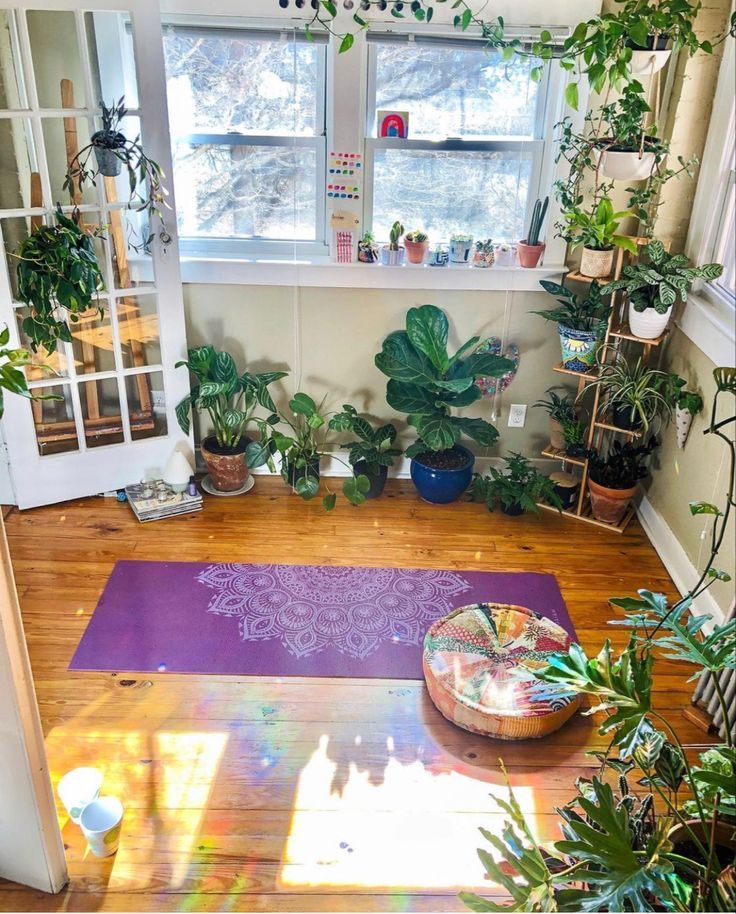
Not every home has room for a dedicated studio, and that is perfectly fine. One of the easiest small yoga room ideas is to designate a single corner of your bedroom, living room, or home office as your practice zone. The trick is consistency: use the same spot every time so your brain starts to associate it with calm and focus.
Why it works: a defined corner gives your practice a “home base” without requiring you to rearrange furniture or dedicate an entire room. It also lowers the mental barrier to starting a session, since your mat and props are already within reach.
Design tips for your yoga corner ideas:
- Choose a corner near a window for natural light and fresh air.
- Keep the floor clear except for a rolled mat, a small stool, and one or two props.
- Use a soft area rug underneath your mat to define the space visually, even in an open-plan room.
- Hang a single piece of calming wall art or a woven tapestry behind the corner to signal “this is different from the rest of the room.”
For color, stick with warm neutrals like sand, oatmeal, or soft sage green, since they read as restful without feeling cold. A small plug-in salt lamp or a battery-operated candle adds gentle lighting without wiring changes. Budget-friendly alternative: skip the rug and use a folded blanket as a visual boundary, and swap the tapestry for a printed scarf pinned to the wall.
2. Turn an Unused Closet Into a Mini Meditation Nook
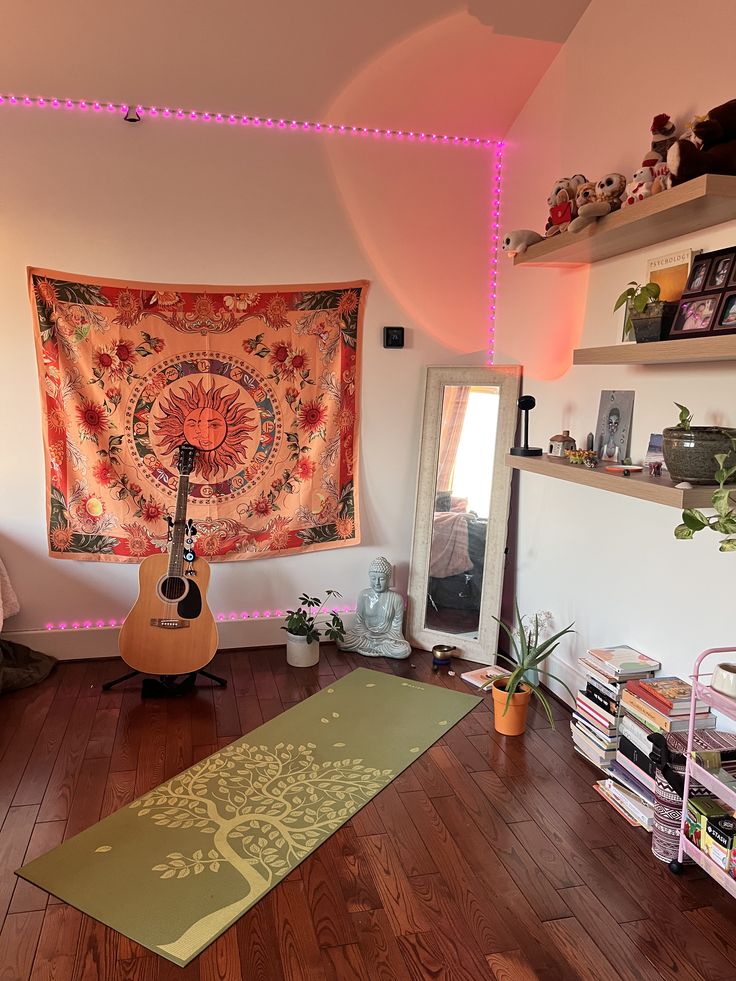
Closets are secretly one of the best small home gym ideas because they are already enclosed, quiet, and easy to shut off from the rest of the house. Remove the door, or swap it for a curtain, and you have an instant meditation space at home that takes up zero extra floor space.
Why it works: a closet nook physically separates your practice from daily distractions like a ringing phone or a passing family member. That sense of enclosure can make meditation feel more intentional, almost like stepping into a private retreat.
Design tips:
- Paint the interior a deep, soothing color such as terracotta, muted teal, or charcoal, since a closet’s small footprint can handle bolder shades that might overwhelm a full room.
- Add a thin meditation cushion or zabuton instead of a chair to save space.
- Install a battery-powered puck light or string lights along the top shelf for soft, adjustable glow.
- Use the existing shelf for a small speaker, a journal, and a candle.
Keep clutter out by storing only what you use during a session. If you rent and cannot paint, use a removable wallpaper panel or fabric backdrop for the same cozy effect. This is one of the most space-efficient zen room ideas available, and it works even in studio apartments.
3. Go Minimalist for a Clean, Distraction-Free Practice Space
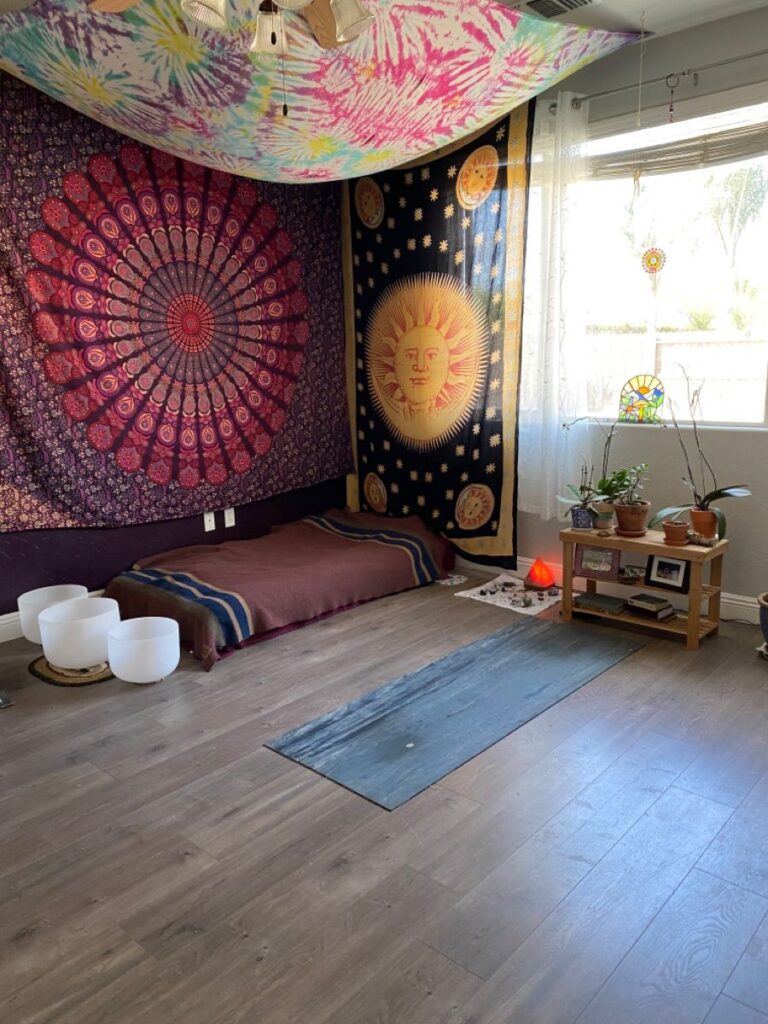
A minimalist yoga room is less about strict rules and more about giving your eyes and mind fewer things to process while you practice. This approach is especially useful in small spaces, where visual clutter can make a room feel even tighter than it is.
Why it works: research on attention consistently shows that busy environments compete for mental focus. Stripping a room down to its essentials frees up that mental bandwidth for breath work and movement instead of scanning shelves and surfaces.
Design tips:
- Stick to a limited color palette of two or three shades, such as white, warm gray, and one accent like blush or clay.
- Choose furniture with clean lines and hidden storage, such as a low bench that doubles as a prop box.
- Store your mat rolled and upright in a simple woven basket rather than leaving it flat on the floor.
- Limit wall décor to one intentional piece, like a framed print or a small mirror.
Natural materials such as light oak, rattan, or linen keep the look warm rather than sterile. Budget-friendly alternative: thrifted baskets and a can of white paint can transform a cluttered spare corner into a minimalist yoga room for under fifty dollars.
4. Bring the Outdoors In With a Plant-Filled Zen Room
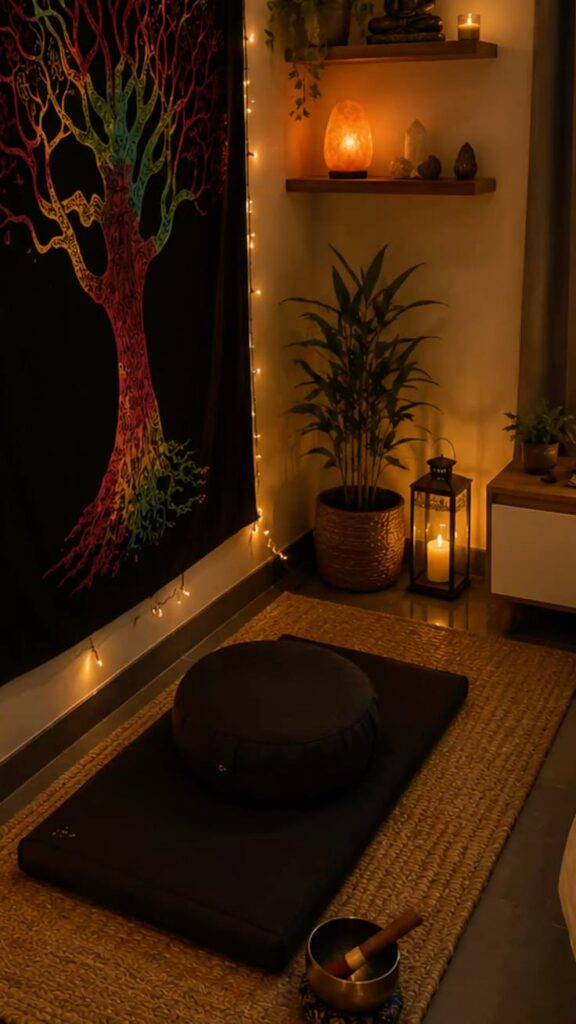
Plants do more than look pretty. Certain varieties improve air quality and add a layer of texture and life that photographs and screens simply cannot replicate. A plant-focused approach is one of the most popular zen room ideas because it connects your practice to something living and growing.
Why it works: greenery has a documented calming effect, and caring for plants can become its own small mindfulness ritual before or after your session. Even a few well-placed pots can make a bare corner feel intentional and finished.
Design tips:
- Choose low-light, low-maintenance plants like pothos, snake plant, or ZZ plant if your yoga area does not get much sun.
- Group plants of varying heights using a plant stand to add depth without eating up floor space.
- Add one trailing plant, such as English ivy, on a shelf or hanging planter to soften harsh corners.
- Use terracotta or woven planters for a natural, grounded look rather than glossy ceramic.
Pair your plants with a jute rug and linen curtains for a cohesive, earthy palette. Budget-friendly alternative: propagate cuttings from a friend’s plants instead of buying full-grown ones, and repurpose mason jars as starter planters.
5. Use Natural Light and Sheer Curtains for a Soft Glow
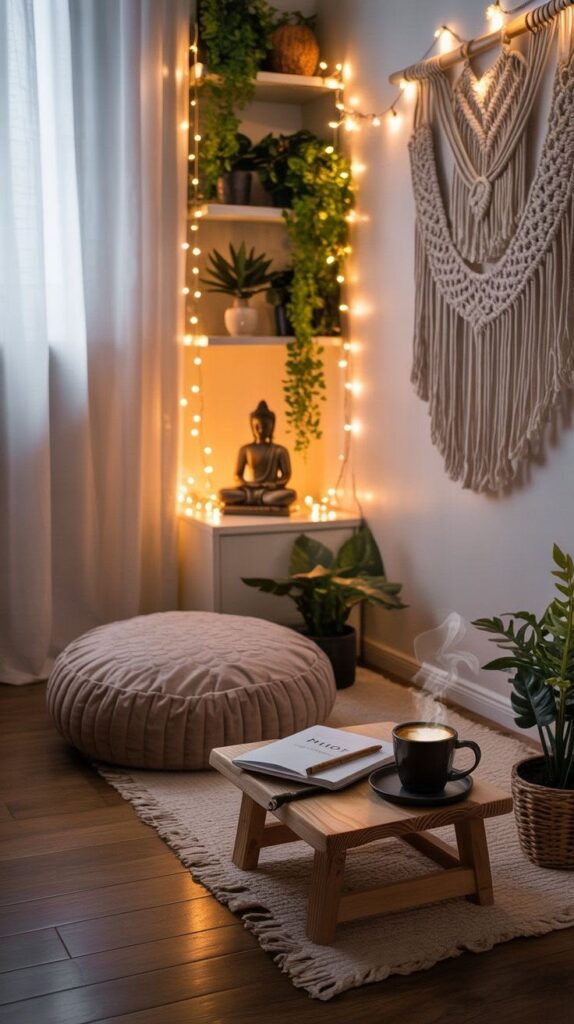
Lighting can make or break the feel of a home yoga studio, and natural light is the most flattering, calming option available. If your practice space has a window, building your design around it is one of the smartest cozy yoga room ideas for home you can implement.
Why it works: soft, diffused daylight reduces harsh shadows and glare, which helps your nervous system settle into a relaxed state more easily than bright overhead lighting does. It also makes the room feel larger, which matters in tight quarters.
Design tips:
- Hang sheer white or linen curtains to filter direct sun into a gentle glow rather than blocking it out completely.
- Position your mat perpendicular to the window so light falls across the room rather than directly in your eyes.
- Add a small mirror across from the window to bounce light deeper into the space.
- Avoid heavy blackout drapes in this area; save those for the bedroom.
For evening sessions, layer in warm-toned string lights or a dimmable lamp with a 2700K bulb, which mimics candlelight. Budget-friendly alternative: an old bedsheet dyed and hemmed into a curtain panel works just as well as a store-bought sheer.
6. Layer Textures for a Warm, Cozy Feel
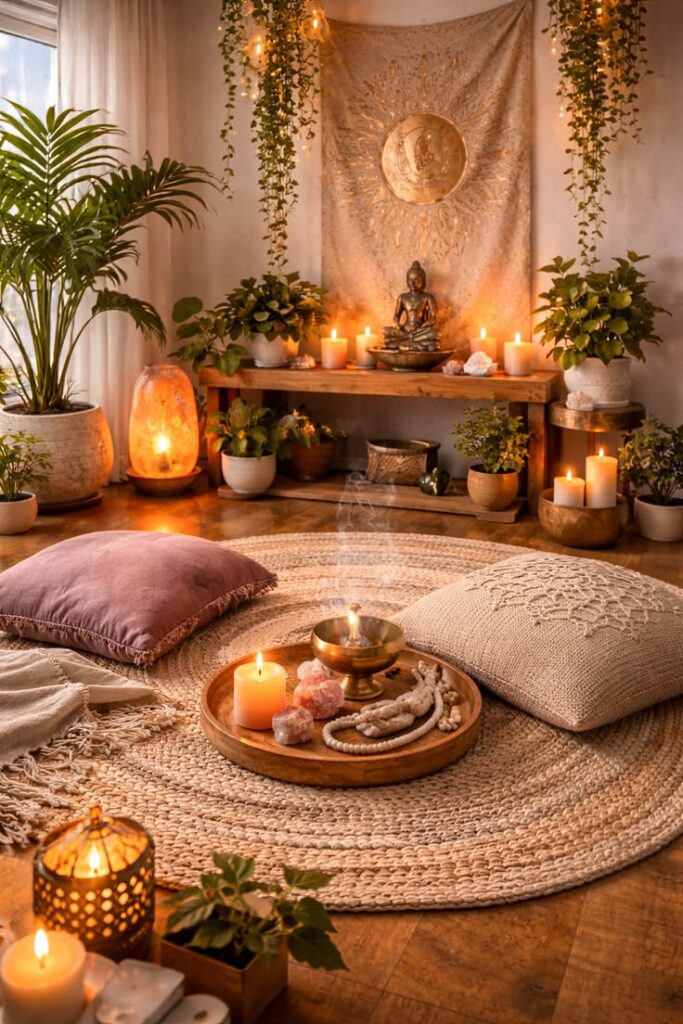
A common mistake in small yoga room ideas is making the space so sparse that it feels cold rather than calm. The fix is texture. Layering a few tactile elements, like a chunky knit throw, a woven rug, and a linen bolster, adds warmth without adding visual noise.
Why it works: texture engages the senses in a subtle way, which can make a small room feel inviting rather than clinical. It also gives your eyes soft, organic shapes to rest on instead of hard edges.
Design tips:
- Layer a natural fiber rug, like jute or sisal, under a smaller, softer mat rug for contrast.
- Add one knit or woven throw blanket folded at the edge of your practice area for post-savasana warmth.
- Choose meditation cushions in nubby linen or bouclé rather than smooth synthetic fabric.
- Introduce one wood or rattan element, such as a small side table, to balance out softer textiles.
Stick to a muted, tonal color story, think oatmeal, taupe, and dusty rose, so the textures feel curated rather than mismatched. Budget-friendly alternative: repurpose a bath towel as a bolster cover, and use a flat bedsheet as an impromptu floor layer under your mat.
7. Add a Foldable or Multi-Purpose Yoga Mat Storage Wall
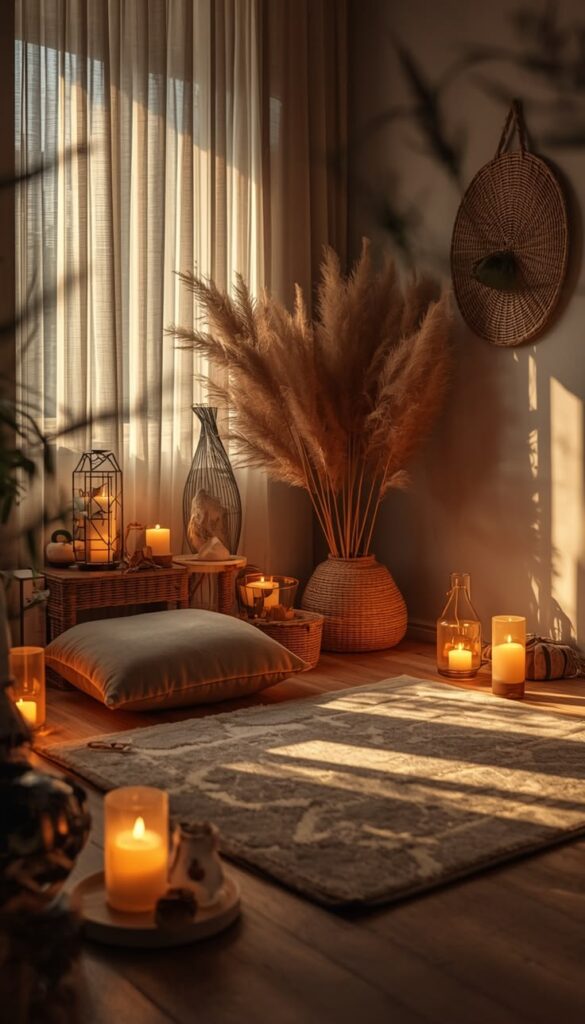
Storage is often the biggest obstacle in small home gym ideas, since blocks, straps, mats, and blankets can pile up fast. A wall-mounted storage solution keeps your gear organized and visible without stealing floor space, which is essential in a compact yoga meditation room.
Why it works: when your props are tidy and easy to reach, you are far more likely to actually use them. Clutter on the floor is also one of the fastest ways to make a small room feel chaotic, so lifting storage onto the wall instantly opens up the space.
Design tips:
- Install a simple pegboard or a row of hooks to hang mats, straps, and towels vertically.
- Use a slim floating shelf for folded blankets, blocks, and a candle or diffuser.
- Choose a fold-down wall desk or shelf if you also use the space for journaling or planning your practice.
- Match hardware finishes, like matte black or brushed brass, to your existing décor for a cohesive look.
Keep the storage wall visually calm by grouping similar items together and avoiding overly bright prop colors if possible. Budget-friendly alternative: a few adhesive hooks and a secondhand ladder shelf can create the same organized effect for under twenty dollars.
8. Create a Balcony or Patio Yoga Retreat
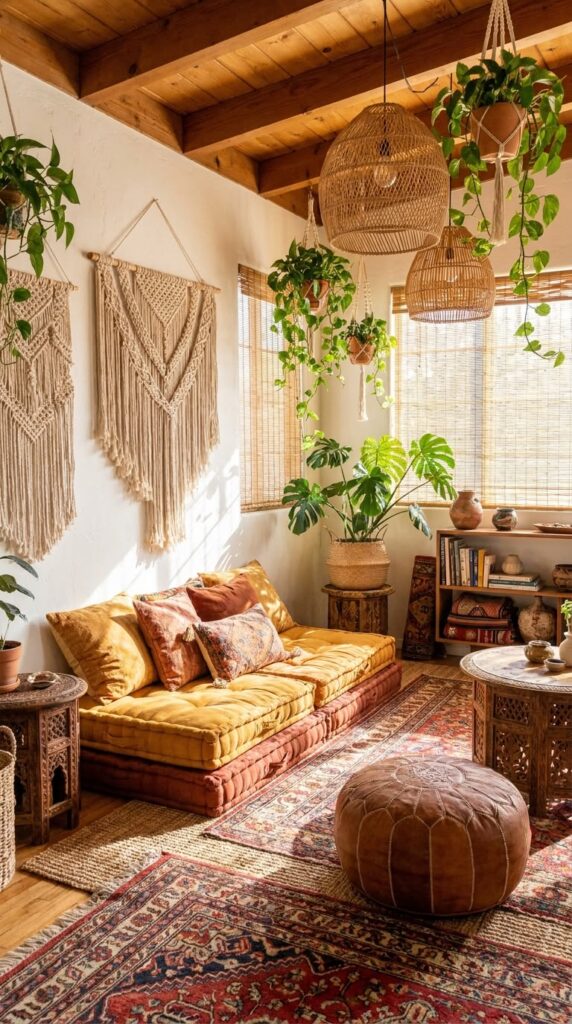
If your indoor square footage is maxed out, look outside. A balcony, patio, or even a wide windowsill nook can become a surprisingly effective home yoga studio, especially in mild climates. This is one of the more creative small yoga room ideas for renters who cannot alter interior walls.
Why it works: fresh air and natural sounds, like birds or wind, add a sensory layer that indoor spaces cannot fully replicate. Practicing outside can also make your session feel like a genuine escape rather than another task on your to-do list.
Design tips:
- Use a weatherproof mat or a folding yoga mat you can roll up and store indoors between sessions.
- Add a small outdoor rug to define the space and cushion your feet before and after practice.
- Bring in potted plants that thrive outdoors, like lavender or rosemary, for a fragrant, calming border.
- Use a slim, foldable stool or cushion for seated meditation rather than bulky furniture.
String lights or a solar lantern extend usability into the evening. Budget-friendly alternative: a picnic blanket layered over a yoga mat works well for occasional outdoor sessions, so you do not need to invest in a dedicated outdoor mat right away.
9. Design a Small Home Yoga Studio With Mirrors
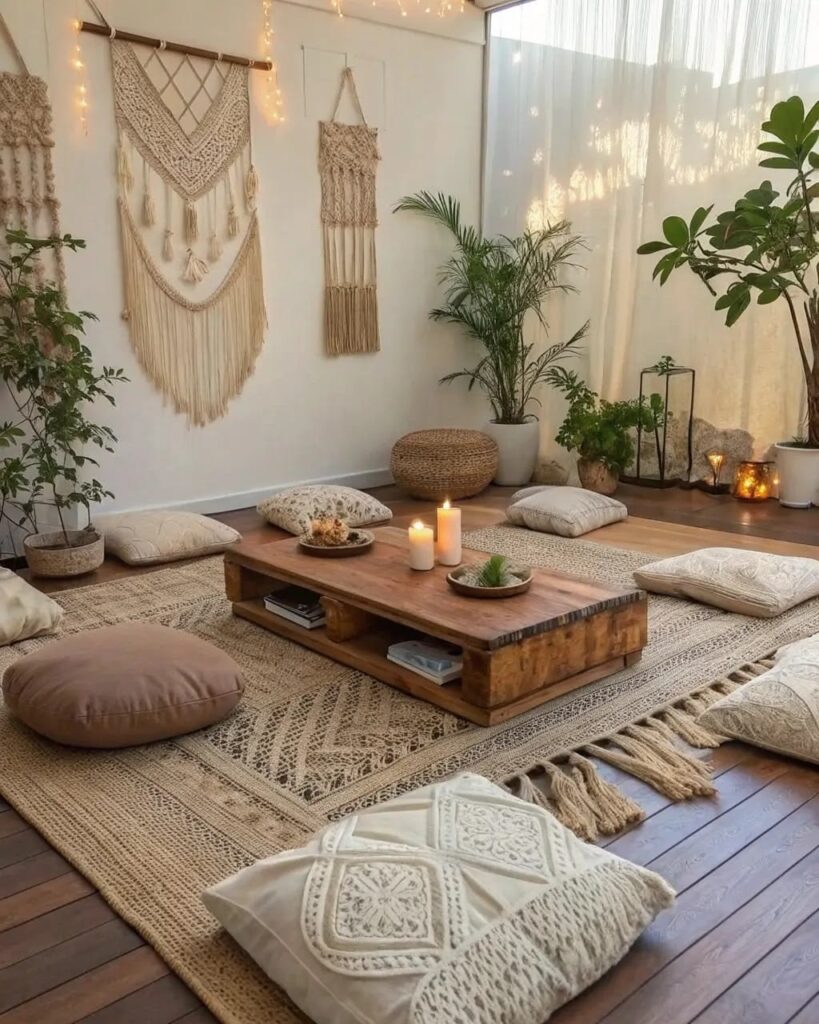
Mirrors are a classic small-space trick, and they work just as well in a yoga meditation room as they do in a tiny living room. A single well-placed mirror can make a cramped area feel noticeably larger while also helping you check your alignment during poses.
Why it works: mirrors reflect both light and space, tricking the eye into perceiving more room than actually exists. For yoga specifically, a mirror also gives you visual feedback on form, which is genuinely useful if you practice without an instructor in the room.
Design tips:
- Choose one large mirror rather than several small ones to avoid visual clutter.
- Lean a full-length mirror against the wall at a slight angle instead of mounting it, which is renter-friendly and easy to reposition.
- Position the mirror opposite your main light source so it reflects brightness into the room.
- Frame the mirror in natural wood or a soft matte finish to keep the look warm rather than clinical.
Avoid placing the mirror directly across from your seated meditation spot, since staring at your own reflection during stillness practice can be distracting rather than calming. Budget-friendly alternative: check secondhand marketplaces for full-length mirrors, which are frequently listed for free or very low cost during moves.
10. Set the Mood With Candles, Incense, and Soft Lighting
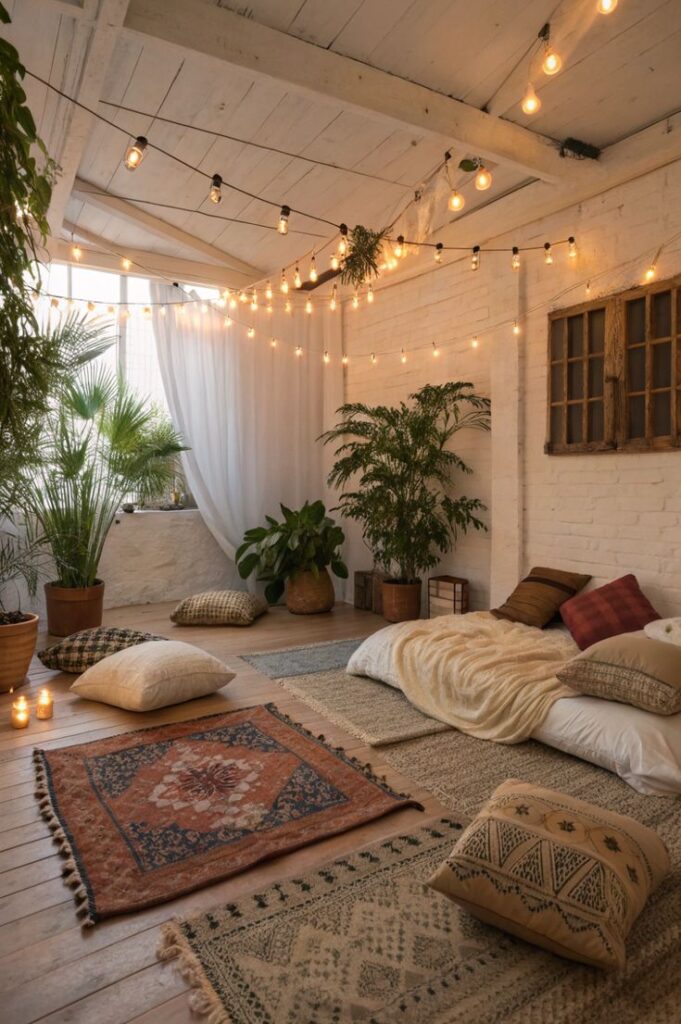
Scent and light are two of the fastest ways to transform an ordinary room into a genuine meditation space at home. This idea pairs beautifully with any of the setups above, since it is more about atmosphere than square footage.
Why it works: certain scents, like lavender, sandalwood, or eucalyptus, are associated with lowered stress responses, and dim, warm lighting signals to your nervous system that it is time to slow down. Together, they create a multi-sensory cue that shifts you out of “task mode” and into practice mode.
Design tips:
- Use soy or beeswax candles in amber or clear glass containers for a soft, flattering glow.
- Add a small diffuser with a timer function so scent builds gradually rather than overwhelming the space.
- Swap one overhead bulb for a warm 2700K to 3000K option, or add a plug-in dimmer switch.
- Group candles on a small wooden tray to keep wax drips contained and the surface tidy.
If you live with roommates or in a rental with strict fire codes, flameless LED candles offer the same visual warmth without the risk. Budget-friendly alternative: a single dollar-store candle and a five-minute stretch of diffused essential oil can set the same mood as a full luxury setup.
11. Personalize With Meaningful Décor and a Gratitude Wall
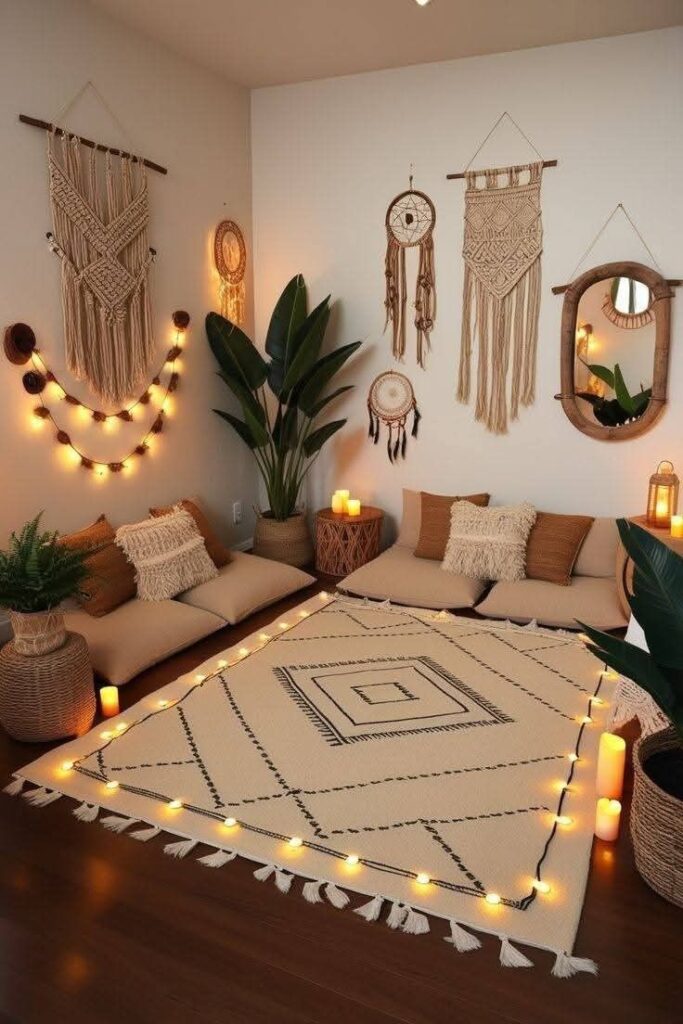
The final piece of great cozy yoga room ideas for home is making the space feel like yours. A gratitude wall, mood board, or small gallery of meaningful objects gives your practice area emotional resonance, not just visual polish.
Why it works: personal touches, like a photo, a favorite quote, or a small object from a meaningful trip, remind you why you are showing up to the mat in the first place. That emotional anchor can make it easier to stay consistent with your practice over time.
Design tips:
- Dedicate one small section of wall to rotating items, such as postcards, affirmations, or a seasonal mood board.
- Keep the gallery loosely organized with a consistent frame color or matting to avoid visual chaos.
- Add a small shelf for objects that hold meaning, like a stone from a trip or a gift from a teacher.
- Refresh the display every few months to keep the space feeling current rather than static.
If you enjoy visual goal-setting, this is also a natural spot for a mindfulness or intention board near your practice area, which pairs well with a morning meditation routine, similar to the ideas in our vision board ideas guide. Budget-friendly alternative: print photos at a local pharmacy kiosk and use washi tape instead of frames for a flexible, low-cost gallery wall.
What Do You Really Need for a Small Home Yoga Studio?
If you are just getting started, you do not need every idea on this list at once. At minimum, a functional home yoga studio needs four things:
- A dedicated spot, even a corner, that stays clear of other household clutter.
- Soft, adjustable lighting, whether that is a window, a lamp, or a few candles.
- A comfortable surface, such as a mat plus a small rug or cushion underneath.
- One calming sensory element, like a plant, a scent, or a piece of art, to signal “this is different from the rest of the room.”
Everything else, mirrors, storage walls, gratitude corners, is a bonus layer you can add gradually as your practice and your budget allow. Many people find that starting with just a mat and a candle in a quiet corner is enough to build a consistent habit, and the décor grows more elaborate over time as they figure out what actually helps them focus.
How Much Space Do You Actually Need?
A single yoga mat measures roughly two feet by six feet, so technically any clear patch of floor that size will work. For comfortable movement through poses like downward dog or a wide-legged forward fold, aim for at least three feet of clearance on each side of the mat where possible. If your space is tighter than that, choose seated or restorative poses for that spot instead of full flow sequences, and save bigger movements for whenever you have access to more open floor.
Bringing It All Together: Your Next Steps
You do not need a spare room or a big budget to build a space that supports real rest and real practice. Whether you carve out a single yoga corner, convert a closet, or dress up a balcony, the goal is the same: create a spot your body and mind recognize as a place to slow down.
Start small. Pick one or two ideas from this list, whether that is adding sheer curtains for softer light or mounting a simple storage wall, and build from there. A relaxing home décor scheme does not happen overnight, and your practice space can evolve right alongside your practice itself.
If you are also working with a tight footprint elsewhere in the house, the space-saving layout strategies in our guide to sewing room ideas for small spaces translate surprisingly well to a compact yoga corner, since both rely on smart storage and clear sightlines. And if calm, intentional design is a theme you are chasing throughout your home, our classroom calming corner ideas offer a few more sensory tricks worth borrowing for adult spaces too.
However much space you have, a cozy, well-planned yoga room is within reach. Roll out your mat, light a candle, and give yourself a corner that is entirely your own.


